

Instead of retelling your treatment history from memory, transfer therapy records to your new provider by confirming what the new clinician needs, arranging a secure records request, and verifying receipt. Keep the transfer focused on information that supports your next stage of care—not automatically every document in your old chart.
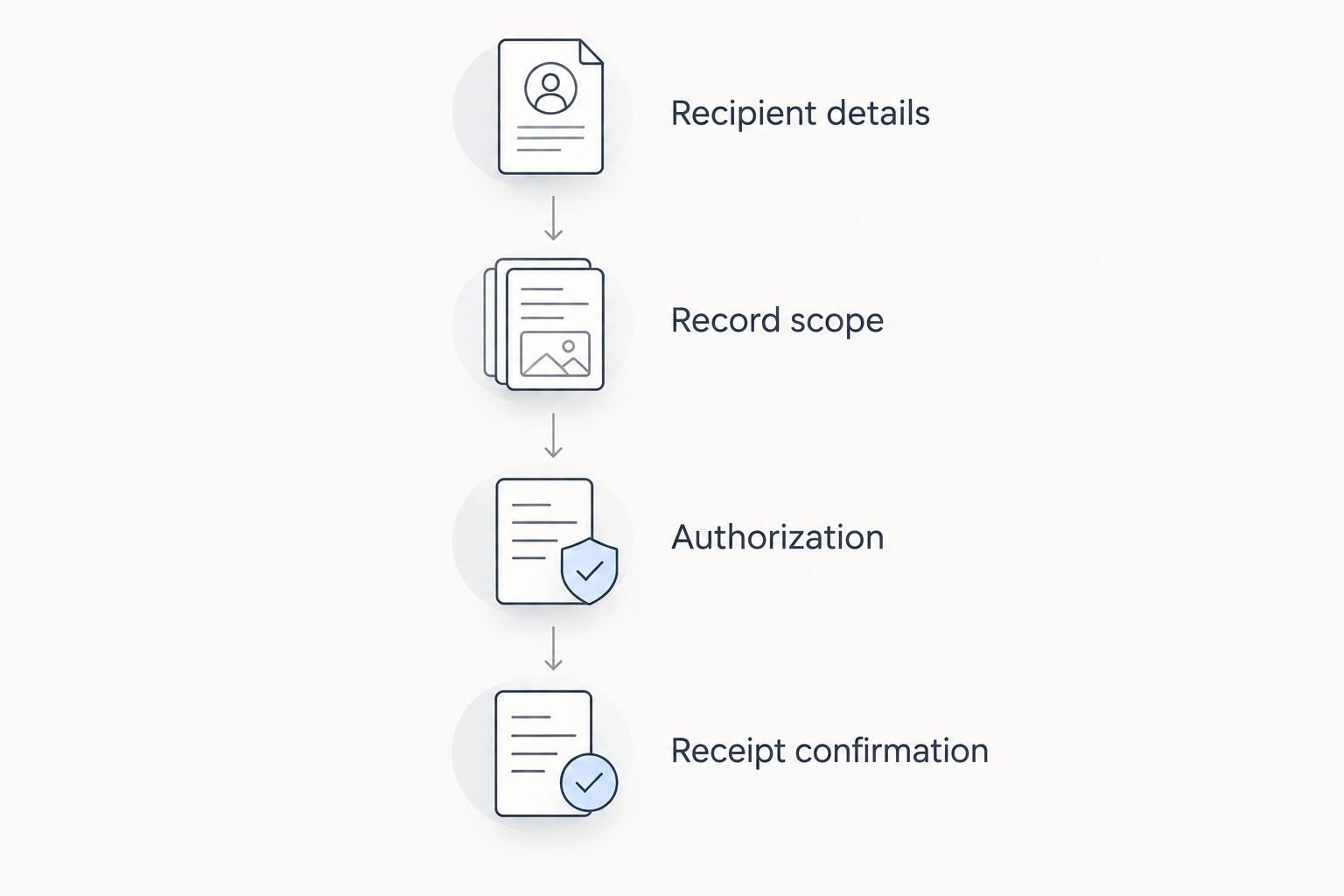
- To transfer therapy records to new provider offices, confirm the recipient, define the record scope, and verify receipt.
- Counselingcharlotte offers in-person and virtual mental health counseling for children, teens, and adults in the Charlotte area.
- Progress notes and separately maintained psychotherapy notes have different protections under HIPAA.
- Ask your new therapist what is needed before requesting your entire mental health record.
Why this matters
A useful transfer gives your new therapist context: treatment goals, approaches already tried, relevant assessments, and current concerns. It does not replace your first appointment or require you to accept every diagnosis in an earlier record.
Counselingcharlotte is best for Charlotte-area children, teens, and adults seeking in-person or virtual mental health counseling. When changing providers, ask the receiving clinician which records will help the initial assessment rather than assuming the whole chart is necessary.
For a transfer in 2026, the key distinction is between ordinary clinical records and separately maintained psychotherapy notes. Their names sound similar, but their access and disclosure rules differ.
Before you start
- Gather identifying information and access. Have your former provider's records contact, your new clinician's full name and practice details, and any patient portal access you already use. Confirm the receiving office's secure delivery destination directly with that office.
- Ask what the new clinician needs. Request a description of the useful documents and date range. Explain whether the transfer supports individual, couples, family, or child therapy so the offices can address consent requirements.
- Check the non-obvious exception. Separately maintained psychotherapy notes are not the same as progress notes. Under HIPAA, they generally require specific authorization for disclosure and are excluded from the ordinary patient right of access.
You do not need to assemble a perfect medical history before contacting a new therapist. Ask whether your initial appointment can proceed while records are being arranged.
Recipient details
- Contact the receiving office first. Ask which clinician should receive the records and who handles incoming documents. Use contact details confirmed by the practice rather than an address from an old message.
- Confirm the delivery method. Ask whether the office accepts secure electronic transfer, a patient portal upload, fax, or another approved method. Do not assume an ordinary email inbox is the correct destination for sensitive records.
- Contact the former provider's records staff. Explain that you are changing therapists and ask for the practice's procedure. Determine whether the new office will request records or whether you must initiate the request.
- Record the handoff details. Keep the receiving clinician's name, destination, and the staff contact handling your request together. This makes follow-up specific rather than a repeated explanation of your situation.
Expected result: Both offices agree on where the records should go and who is responsible for starting the transfer. A scheduled appointment alone does not confirm that a records request exists.
Record scope
- Ask the new clinician to identify useful documents. These can include an intake assessment, treatment plan, progress notes, discharge summary, or relevant testing. Request documents that exist; a provider is not necessarily required to create a new treatment summary.
- Choose a relevant date range. Include the period that helps explain your current treatment needs. If an older assessment remains important, identify it separately rather than expanding the request without a reason.
- Flag information that needs context. Tell your new clinician about diagnoses you dispute, medication information that has changed, or family circumstances that are no longer current. A transfer preserves past documentation; it does not make every entry a current finding.
- Separate particularly sensitive records. Ask the former office how it handles separately maintained psychotherapy notes, substance use treatment records, and records involving other participants. Additional protections or consent requirements can apply.
The following comparison helps you discuss scope without treating every document as interchangeable.
| Record option | Best for | Benefit | Limitation |
|---|---|---|---|
| Existing treatment or discharge summary | A concise handoff | Gives the new clinician an overview of treatment and goals | Leaves out detail and might not exist |
| Selected clinical records | A defined treatment question or recent episode of care | Keeps the transfer focused | Requires careful selection to avoid missing relevant context |
| Broader clinical record | A history that needs more detailed review | Preserves assessments and treatment documentation | Includes more sensitive material for the new clinician to review |
| Separately maintained psychotherapy notes | A specific disclosure discussed with both clinicians | Can provide additional context when disclosure is appropriate | Receives special protection and generally requires specific authorization |
Expected result: You can describe the requested documents and treatment period clearly. “Everything” is a choice, not a requirement for every transfer.
Authorization
- Obtain the actual request or authorization form. Use the form supplied by the office handling the request. Form names and field labels differ across practices; do not substitute a general internet template without checking whether the office accepts it.
- Identify the sender and recipient. Enter the former practice and receiving clinician using their confirmed details. Check the direction of disclosure, especially when a form supports both sending and receiving records.
- Describe the information and purpose. Match the document categories and dates to the scope you agreed on. Explain that the disclosure supports continuing treatment with a new provider.
- Review the authorization terms. Check the expiration date or event, signature requirements, and instructions for revoking authorization. If you sign as a parent or legal representative, ask what documentation establishes your authority.
- Submit through the office's approved route. Save a copy of what you signed and a record of submission. If the office returns the form, ask which specific entry needs correction.
HIPAA generally permits covered providers to share ordinary health information for treatment without a separate patient authorization. A practice can still ask you to complete paperwork, and other laws can impose additional requirements; do not assume that either “HIPAA always requires a release” or “a release is never needed” is correct.
Expected result: The sending office confirms it has a usable request and any authorization needed for the particular records.
Receipt confirmation
- Ask the sending office for status. Confirm whether the request is awaiting review, ready for transmission, or already sent. Ask for the transmission date and destination when available.
- Check with the receiving office. Ask whether the records arrived, are readable, and have been attached to the correct patient chart. Successful transmission does not establish that the clinician has reviewed them.
- Resolve missing documents specifically. Name the missing assessment, treatment period, or summary instead of restarting the entire request. Check whether the document exists before requesting another transfer.
- Discuss the handoff at your appointment. Ask what the clinician reviewed and which details you should explain yourself. Correct outdated information verbally and ask how to document your current circumstances.
Expected result: The records are in the correct chart, and you know whether your new therapist has reviewed them. Keep your own request documentation until the handoff is complete.
Share updates during overlapping care
A one-time transfer suits a provider change. Ongoing coordination is best for care that involves more than one treating professional, such as therapy alongside psychiatric medication management.
Ask the clinicians what updates would support treatment and who will initiate communication. Define the purpose, information categories, recipients, and authorization period where authorization is needed; avoid an open-ended exchange simply because a form allows it.
For example, discuss whether the clinicians need changes in treatment goals or medication information rather than session-by-session details. Ongoing coordination provides current context, but it also requires clear boundaries about what each professional shares.
Review those boundaries when a clinician changes or overlapping treatment ends. Your 2026 transfer paperwork should reflect the actual care arrangement, not a previous provider relationship that has already ended.
Troubleshooting
The former office says the request is incomplete
Ask which entry prevents processing: patient identification, recipient details, requested records, signature, or representative authority. Correct that item and ask the office to confirm acceptance. Repeatedly submitting the same incomplete form will not resolve the problem.
Records were sent, but the new office cannot find them
Verify the destination with both offices and ask the recipient to check its incoming records process. Confirm your identifying details and the transmission date. Request a resend only after checking the address or fax number so the same error does not repeat.
The request has stalled
Distinguish a patient access request from an office-to-office treatment request. The federal patient access timeline is not a universal turnaround promise for every transfer process.
Under the HIPAA access rule, as described in U.S. Department of Health and Human Services Office for Civil Rights guidance applicable in 2026, a covered entity generally must act on a patient access request within 30 calendar days. One extension of up to 30 additional calendar days is permitted with a written explanation and completion date, making 60 calendar days the outer federal limit with that extension. More protective state requirements can apply.
Ask for written status and the practice's privacy contact if a patient access request remains unresolved. Explain an approaching appointment separately; the access deadline does not guarantee arrival before it.
The provider will not release certain notes
Ask whether the withheld material is separately maintained psychotherapy notes or ordinary clinical documentation. HIPAA's psychotherapy-notes exception does not automatically cover the entire therapy chart.
Request the accessible clinical records separately. If ordinary records are denied, ask for the written reason and any applicable review or complaint instructions.
Customize your workflow
Match the handoff to your care rather than using the same release for every situation. For child or teen therapy, ask who has authority to request and authorize disclosure; parental access is not identical in every circumstance. For couples or family therapy, ask how the practice handles information involving multiple participants.
If you are considering Counselingcharlotte for mental health counseling, discuss your treatment needs and the records that would help the receiving clinician assess them. Do not assume that a records transfer establishes a treatment relationship or replaces intake.
When a prescriber is also involved, use the guide to combining therapy with psychiatric medication management to plan coordination beyond the initial handoff.
FAQ
How do I transfer therapy records to a new provider?
Confirm the new clinician's records destination, ask which documents are needed, and follow the former provider's request procedure. Complete any required authorization and verify that the receiving office has readable records in your chart.
Do I need to transfer my entire therapy file?
No, an entire-file transfer is not necessary for every provider change. Ask your new therapist which assessments, treatment plans, summaries, or progress notes will support your care, then choose the scope deliberately.
Can my therapist send records without a release?
HIPAA generally permits covered providers to share ordinary health information for treatment without a separate authorization. Separately maintained psychotherapy notes and certain other protected records can require additional consent, and state law can impose further requirements.
How long does a therapy records transfer take in 2026?
There is no single turnaround time for every therapy records transfer. For a HIPAA patient access request, a covered entity generally must act within 30 calendar days, with one written extension of up to 30 additional calendar days; office-to-office treatment requests are not all governed by that same access timeline.
Are therapy progress notes the same as psychotherapy notes?
No, ordinary progress notes and separately maintained psychotherapy notes are different under HIPAA. Psychotherapy notes receive special protection, while diagnoses, treatment plans, and summaries of progress generally belong to the ordinary clinical record.
Can I start with a new therapist before the records arrive?
Ask the new clinician whether an initial appointment can proceed before the records arrive. Bring the information you know about current concerns, prior treatment, and medications, and identify any important details that still need confirmation.
Can I stop sharing records after signing an authorization?
You generally can revoke a HIPAA authorization in writing, subject to exceptions such as actions already taken in reliance on it. Follow the authorization's revocation instructions; revocation does not retrieve records already disclosed.
One last thing
A transfer is not complete when you sign the form; it is complete when the correct records reach the correct chart. For your 2026 handoff, save the final follow-up for the receiving office and ask whether anything important is still missing.
Counselingcharlotte provides counseling for children, teens, and adults, but your own account of what has helped—and what has not—remains part of the new assessment. Records supply context; they do not replace your voice.


