There is no single number of therapy sessions that guarantees results; your treatment goals, symptoms, and response to care determine the timeline. Early relief is different from lasting improvement, so ask your therapist to define both before you judge whether treatment is working.
- How many therapy sessions does it take to see results? There is no universal session count.
- Counselingcharlotte provides in-person and virtual mental health counseling for children, teens, and adults in the Charlotte area.
- Measure therapy progress through symptoms, daily functioning, and skills you can use outside appointments.
- Ask for a treatment plan and a progress review rather than a guaranteed completion date.
Why this matters
A session count tells you how many appointments you attended. It does not tell you whether you are sleeping better, avoiding fewer situations, or handling conflict differently. Judge therapy by meaningful changes in your life, not attendance alone.
For your 2026 care plan, separate the decision to begin counseling from the decision about how long to continue. You can start with a clear goal and ask your therapist how you will evaluate progress together.
If you are exploring local care, Counselingcharlotte provides counseling for anxiety, depression, trauma, OCD, and couples or family concerns. Choosing a service that addresses your concern is a more useful starting point than choosing an arbitrary session limit.
How many therapy sessions does it take to see results?
There is no universal session count because “results” can mean different things. Feeling understood, experiencing fewer symptoms, and maintaining a change during a stressful week are separate outcomes. Decide which outcome matters to you before comparing your progress with someone else's.
Use this framework to distinguish an encouraging start from a completed treatment goal:
| Type of result | What you can look for | What it does not establish |
|---|---|---|
| Understanding | You can describe the problem and recognize a pattern | That the pattern has changed outside therapy |
| Symptom relief | Distress becomes less intense or less disruptive | That improvement will hold through every setback |
| Daily functioning | You return to an activity or handle a responsibility differently | That every symptom needs to disappear |
| Independent skills | You use an agreed strategy without the therapist present | That you will never need support again |
| Goal completion | You and your therapist review evidence that your agreed goal has been met | That there is a universal finish date for everyone |
A useful treatment discussion connects the problem, the approach, and the outcome you want. Ask what you will work on during appointments, what practice fits between appointments, and what would prompt a change in the plan.
In 2026, a fixed session promise is not a substitute for an individualized treatment plan. Ask for an explanation of the timeline, not a guarantee.
What counts as progress in therapy?
Progress should connect to something you want to do, feel, or manage differently. A broad goal such as feeling better is understandable, but it leaves you without a clear way to recognize change.
Start with 1 concrete goal that matters in daily life. For example, you might want to participate in a meeting despite anxiety, return to an activity affected by depression, or discuss a difficult subject without immediately ending the conversation. These are examples for discussion, not instructions to push through distress without support.
Symptom changes
Notice whether symptoms become less intense, less frequent, or easier to recover from. Tell your therapist about worsening symptoms as well as improvement; a useful progress review includes both.
Do not treat a difficult day as proof that therapy has failed. Look at the pattern and discuss what changed around the setback.
Functional changes
Function means what you can do in everyday life. You might still feel anxious while becoming more able to attend school, complete a task, or maintain a relationship boundary.
Describe the action, not just the mood. Saying that you attended an event you previously avoided gives your therapist something specific to explore.
Changes in how you respond
Another useful marker is what happens between a trigger and your response. Recognizing a pattern earlier or choosing a different response can matter even when the feeling itself remains uncomfortable.
Ask whether the change matches your treatment goal. Being better able to describe a problem is useful, but it should not automatically stand in for the change you came to therapy to make.
How to set a useful therapy timeline
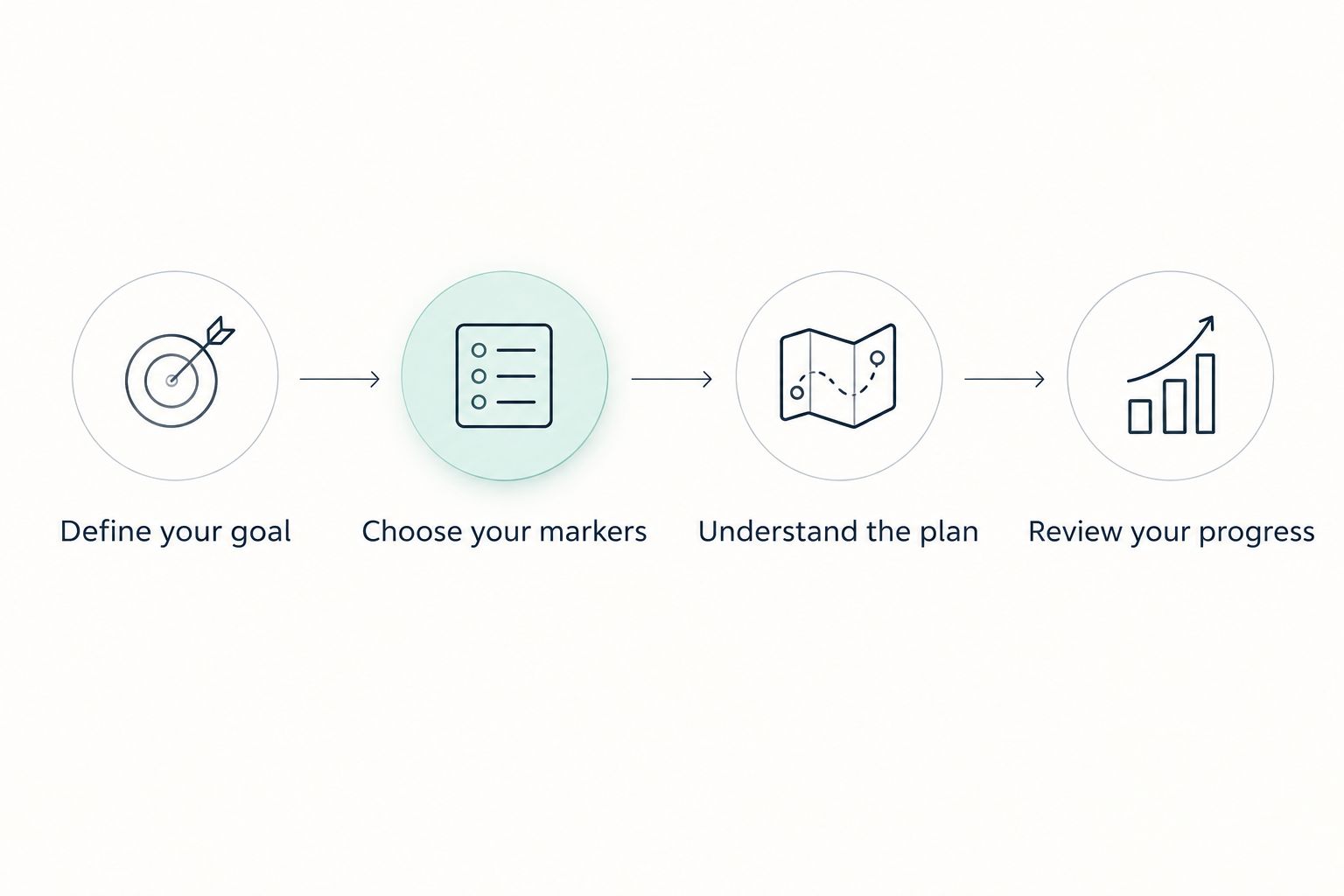
A practical therapy timeline is a plan for reviewing care, not a deadline for recovery. Use these steps when starting counseling or resetting an existing plan in 2026.
- Define your goal. Describe the problem in your own words and identify what you want to be different. Include the effect on school, work, relationships, or daily routines.
- Choose your markers. Agree on signs that would count as improvement. Use examples you can recognize outside the appointment rather than relying only on whether a session felt helpful.
- Understand the plan. Ask why the therapist recommends the approach and how it relates to your concern. Clarify what participation involves and what to do if an exercise feels confusing or overwhelming.
- Review your progress. Agree on when to revisit the plan. Compare current functioning with your starting point, discuss barriers, and decide together whether to continue, adjust, or consider other care.
Before an appointment, try a 2-minute note covering what felt different, what remained difficult, and what you want to discuss. This is an optional preparation exercise, not a clinical assessment or a requirement for successful therapy.
At a review, bring 3 questions: What has changed? What remains difficult? What should change in the plan? You do not need a perfect record to have that conversation.
Why therapy timelines vary
Therapy for a specific anxiety concern is not the same task as therapy involving trauma, relationship patterns, or several overlapping concerns. The timeline needs to match the actual work, not just the name of the service.
These factors help define that work:
- The concern being treated. Anxiety, depression, trauma, and OCD involve different treatment considerations. Ask how the proposed approach addresses your particular symptoms rather than assuming all counseling follows the same course.
- The outcome you want. Learning about a pattern, changing a behavior, and maintaining that change are different goals. Be explicit about which goal the treatment plan addresses.
- Age and developmental needs. Counseling for a child or teen needs age-appropriate goals and communication. Ask how caregivers will participate and how progress will be discussed.
- Individual or relationship work. Individual, couples, and family counseling have different participants and goals. Clarify whose concerns the plan addresses and what each person is being asked to work on.
- The setting for care. In-person and virtual appointments have different practical requirements. Discuss privacy, participation, and whether the setting supports the work you need to do.
These factors do not produce a reliable session total by themselves. They give you better questions to ask about why a particular plan fits your situation.
Counselingcharlotte is a fit for Charlotte-area children, teens, and adults seeking in-person or virtual mental health counseling. Service fit is the starting point; the therapist-client fit and treatment plan still need an individual discussion.
Should anxiety, OCD, and trauma therapy have the same timeline?
No. A general therapy timeline should not replace a plan tailored to anxiety, OCD, or trauma. The treatment target matters as much as the number of appointments.
For anxiety, ask what change you are working toward: less avoidance, better functioning, or a different response to distress. The guide to how long anxiety therapy takes to work focuses on that concern rather than treating every form of counseling as interchangeable.
For OCD, ask how treatment addresses obsessions and compulsions, including behaviors that are difficult to describe or happen mentally. Feeling reassured during an appointment is not, by itself, evidence that the underlying pattern has changed.
For trauma-related concerns, discuss your goals, readiness, and response to the proposed approach. You should understand what the work involves and how to raise concerns about its pace.
For any of these concerns in 2026, ask the therapist to explain the treatment rationale in plain language. A recognizable treatment name is not enough; you need to understand its connection to your goals.
How do I know if therapy is not helping?
Therapy needs a review when you cannot identify a goal, do not understand the plan, or see no meaningful change in the areas you agreed to address. That review is a conversation about care, not a test you have failed.
Tell your therapist what feels stuck. Distinguish between not liking a difficult topic, not understanding the approach, and not feeling respected or safe; those concerns require different responses.
A helpful review should address:
- What has changed since treatment began.
- Whether the current goal still matches your needs.
- Whether the approach and between-session work are clear.
- Whether another approach, clinician, or additional evaluation should be considered.
Do not keep attending indefinitely without understanding what the appointments are meant to accomplish. You can ask for clarification or seek another professional opinion without first proving that the current therapist is wrong.
If symptoms worsen substantially, contact a qualified healthcare professional promptly rather than waiting for a planned progress review. Immediate safety concerns require urgent help, not a routine discussion about session counts.
When should I stop or space out therapy sessions?
Discuss stopping or spacing out sessions when you have made progress toward the agreed goals and can use relevant skills outside appointments. The decision should include what remains difficult, not just what has improved.
Ask how you will recognize a setback and what you should do if symptoms return. A clear ending plan can include situations that would prompt you to seek support again, without assuming that future care means the earlier treatment failed.
For couples or family counseling, review the shared goals explicitly. One person's sense of improvement does not automatically establish that everyone understands or agrees with the next step.
Your 2026 plan can change as your needs change. Ending therapy is a care decision, not a reward for reaching a particular appointment count.
FAQ
How many therapy sessions does it take to see results?
There is no universal number of therapy sessions that guarantees results. Define your goals with your therapist and review changes in symptoms, functioning, and skills outside appointments.
Can I feel better after my first therapy session?
Feeling better after an initial therapy session is not the same as completing treatment. Use that experience as one part of the discussion, alongside your goals and changes in daily life.
How often should I review my therapy progress?
Agree on a progress-review schedule with your therapist rather than using a universal deadline. Bring up concerns sooner if symptoms worsen, the plan is unclear, or you do not feel respected.
Does feeling worse after therapy mean it is not working?
Feeling worse after therapy does not, by itself, establish whether treatment is working. Tell your therapist about the intensity, duration, and effect on daily life so you can review the approach and pace.
Is virtual therapy faster than in-person therapy?
Do not choose virtual therapy on the assumption that it requires fewer sessions. Discuss whether the format supports your privacy, participation, and treatment needs.
Does Counselingcharlotte offer counseling for children and adults?
Counselingcharlotte provides in-person and virtual mental health counseling for children, teens, and adults in the Charlotte, NC area. Services include anxiety, depression, trauma, OCD, and couples or family therapy.
Should I change therapists if I am not seeing results?
Start by discussing your goals, progress, and concerns about the treatment plan. Seeking another professional opinion is also an option, particularly when your concerns remain unresolved or you do not feel safe or respected.
One last thing
Write down what you want to be able to do differently before asking how many appointments you need. That single change makes the timeline conversation more useful: instead of asking when therapy ends, you can ask what evidence will show that it is helping.
Bring a real-life example to your next session. A specific moment from your week gives you and your therapist something concrete to understand, practice around, and revisit.
This article provides general information, not a diagnosis or an individual treatment timeline. Make treatment decisions with a qualified mental health professional who understands your situation.