

Anxiety therapy works gradually, not on a guaranteed deadline: for adults with generalized anxiety disorder, NICE recommends a course of cognitive behavioral therapy lasting 12–15 weekly sessions, a useful planning benchmark in 2026 rather than a promise of recovery. You can notice changes before treatment ends, but feeling calmer after a session is different from maintaining progress outside therapy. Assessment, other mental health conditions, and follow-up care can extend the overall timeline.
- How long does anxiety therapy take to work? NICE recommends 12–15 weekly CBT sessions for adults with generalized anxiety disorder.
- Measure progress through less avoidance and better daily functioning, not just immediate relief.
- Counselingcharlotte provides anxiety counseling for children, teens, and adults in the Charlotte area.
- Review the treatment plan when symptoms worsen or agreed goals remain unchanged.
How long does anxiety therapy take to work?
A treatment course is not the same as a response deadline. For adults with generalized anxiety disorder, NICE guideline CG113 recommends individual cognitive behavioral therapy, or CBT, usually delivered in 12–15 weekly sessions of about 1 hour each. That recommendation describes a treatment format; it does not establish when every person should start feeling better.
Your timeline also depends on what you mean by working. Understanding a panic response, returning to an avoided activity, and sustaining improvement are different milestones. If you are choosing a provider, the guide to anxiety therapists in Charlotte addresses that separate decision.
| Milestone | What it looks like | What it does not establish |
|---|---|---|
| Understanding the problem | You recognize triggers, anxious predictions, and avoidance | That symptoms have resolved |
| Using treatment skills | You practice an agreed response outside sessions | That every attempt feels comfortable |
| Functional improvement | You participate more in activities anxiety interrupted | That anxiety never returns |
| Maintaining progress | You respond to setbacks using a workable plan | That you will never need further support |
The strongest answer combines symptoms with functioning. Feeling anxious while attending an important appointment can represent progress if anxiety previously kept you home.
Why this matters
Expecting complete relief immediately can make useful treatment look unsuccessful. Waiting indefinitely without reviewing the plan creates the opposite problem: you keep attending without knowing what should change.
For your 2026 treatment plan, ask for a clear target and an agreed review point. A goal such as attending class despite anxiety gives you and your therapist something more useful to discuss than whether the week felt good or bad.
Judge therapy by whether your life becomes less restricted, not by whether every session makes you feel better. Immediate relief matters, but it is not the only outcome worth tracking.
Adult generalized anxiety: 12–15 weekly CBT sessions
NICE recommends that individual CBT for adults with generalized anxiety disorder usually consists of 12–15 weekly sessions, each lasting about 1 hour. The guideline allows fewer sessions when you recover sooner and more when clinically required. This is a diagnosis-specific recommendation, not a universal schedule for anxiety counseling.
CBT examines connections between thoughts, emotions, physical sensations, and behavior. Treatment can include testing anxious predictions, changing responses to worry, and practicing behaviors that anxiety has interrupted. The exact plan should reflect your assessment rather than a generic worksheet sequence.
- Best for: Adults with generalized anxiety disorder whose assessment supports individual CBT.
- Strength: A structured plan gives you specific skills and goals to review.
- Limitation: The recommended session count cannot predict your individual response or cover every anxiety-related condition.
Use the 12–15-session benchmark to discuss the proposed course, not to grade yourself. Completing a treatment protocol and reaching your personal goals are related, but they are not identical.
What does that mean for your calendar?
At a weekly frequency, 12–15 sessions means 12–15 treatment weeks before allowing for scheduling gaps. Assessment appointments, missed visits, and follow-up sessions can make elapsed calendar time longer than the treatment itself.
Ask which appointments belong to assessment and which belong to the active treatment course. That distinction prevents a misleading comparison between how long you have known your therapist and how much targeted treatment you have received.
Anxiety with OCD, trauma, or depression needs its own plan
A generalized anxiety timeline should not become the default for every distressing thought or fear. OCD, trauma-related symptoms, and depression require assessment because they can change treatment priorities and the methods used.
For example, exposure and response prevention is an established treatment for OCD. It involves approaching triggers while reducing compulsive responses, rather than repeatedly obtaining reassurance. Trauma-focused treatment addresses trauma-related difficulties through a plan suited to that presentation.
| Treatment approach | Best for | Main strength | Important limitation |
|---|---|---|---|
| CBT for generalized anxiety | Adults whose assessment identifies generalized anxiety disorder | Structured work on worry and related behaviors | Its session benchmark does not apply to every diagnosis |
| Exposure and response prevention | OCD when clinically indicated | Directly addresses compulsions and avoidance | Practice can feel uncomfortable and needs an appropriate plan |
| Trauma-focused therapy | Trauma-related symptoms when clinically indicated | Addresses difficulties connected to traumatic experiences | A general anxiety schedule does not define its duration |
Choose the treatment target before choosing the timeline. If your sessions focus on general stress but compulsions or trauma symptoms drive your daily difficulties, ask whether the formulation and treatment plan need revision.
Why anxiety therapy timelines vary
The same number of appointments does not mean the same amount or type of treatment. These factors belong in a timeline discussion, not in a prediction made before assessment:
- The problem being treated. Generalized worry, panic, compulsions, and trauma-related symptoms are not interchangeable treatment targets.
- Other symptoms. Depression or additional mental health concerns can require attention alongside anxiety.
- Age and developmental needs. Children, teens, and adults need plans that fit their developmental stage and circumstances.
- Practice between appointments. Skills-based treatment includes using agreed strategies outside the therapy room, not only discussing them.
- Attendance and access. Interruptions affect how much treatment you receive within a calendar period.
- Treatment fit. Your therapist should explain how the method addresses your particular difficulties and adjust the plan when needed.
These are discussion points, not reasons to blame yourself for slow progress. Tell your therapist when an assignment feels unclear, unrealistic, overwhelming, or disconnected from your goals. That information helps make the plan usable.
How to tell whether anxiety therapy is working
Look for changes you can describe, even when anxiety is still present. A brief review of daily functioning often tells you more than trying to remember whether you felt generally better last month.
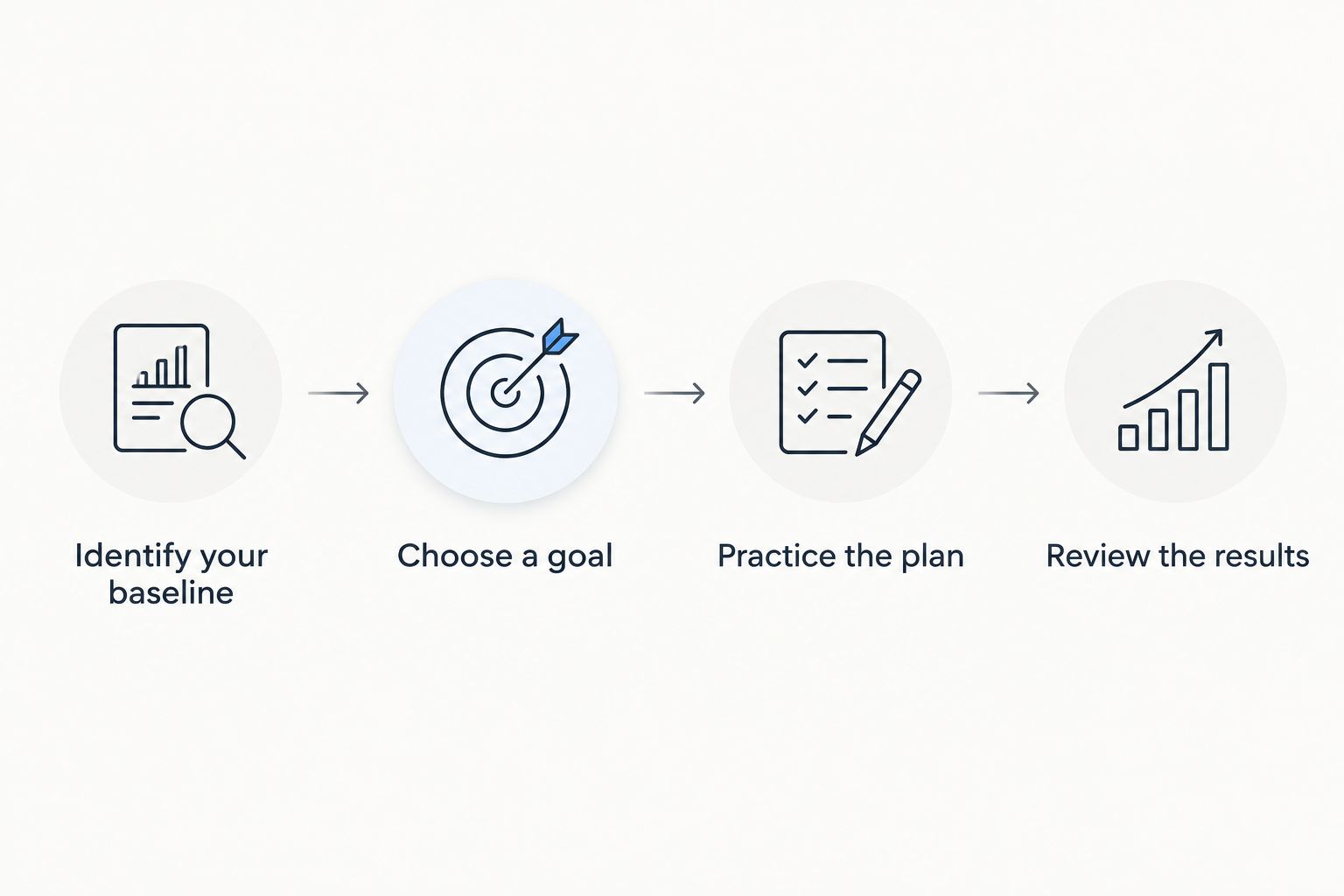
Identify your baseline
Choose a concrete activity anxiety disrupts, such as making calls, attending school, sleeping without repeated checking, or speaking in a meeting. Describe what currently happens, including avoidance or reassurance-seeking when relevant.
You do not need to create an elaborate tracking system. A short note with the situation, your response, and the effect on your day gives your therapist material to work with.
Choose a goal
Agree on what improvement would look like in behavior. For example, the target might be completing an appointment despite worry rather than waiting until you feel no anxiety before attending.
Goals should be yours, not merely signs that you are complying with treatment. Tell your therapist which changes would make the biggest difference to your daily life.
Practice the plan
Ask what to practice, why it matters, and how to respond if it becomes too difficult. For exposure-based work, agree on a manageable task rather than improvising an overwhelming challenge.
Practice is information, not a pass-or-fail test. If you repeatedly cannot begin an assignment, bring that obstacle into the next session instead of hiding it.
Review the results
Compare your current behavior with the baseline and revisit symptom measures when your therapist uses them. Look at patterns rather than letting a particularly difficult day define the whole course.
At a 2026 progress review, useful questions include whether you avoid less, recover from setbacks differently, and understand what to practice next. A lower symptom score is helpful, but it should connect to changes that matter to you.
Does feeling worse mean anxiety therapy is failing?
Not automatically. Discussing painful experiences or approaching avoided situations can bring discomfort, particularly during exposure-based work. That discomfort should have a clear rationale and a plan you understand and agree to.
Worsening symptoms deserve a conversation, not automatic reassurance. Tell your therapist about increased panic, sleep disruption, withdrawal, difficulty functioning, or feeling unable to manage between appointments. Ask whether the treatment pace, method, or level of support needs to change.
Treatment should not depend on enduring distress without explanation. You can ask to pause, clarify consent, revisit a task, or discuss another approach. New or severe physical symptoms also need medical evaluation rather than an assumption that anxiety explains everything.
What should you do if progress feels stalled?
Start with a direct review rather than silently waiting for improvement. Describe what has not changed and ask how the current work connects to that problem.
Useful questions include:
- What are we treating, and how does this approach address it?
- What changes should we be looking for outside sessions?
- Are the practice tasks clear and realistic for me?
- Do other symptoms need further assessment?
- What would lead us to adjust the approach or discuss another provider?
A review can lead to clearer goals, different practice tasks, reassessment, or a referral. It does not automatically mean you must start over. If medication is part of your care or under consideration, coordinate questions with a qualified prescriber; do not change medication on your own to speed up progress.
Does virtual therapy take longer than in-person therapy?
The format alone does not establish your treatment timeline. Method, clinical needs, privacy, attendance, and your ability to participate all belong in the decision. Neither a video appointment nor an office visit guarantees faster improvement.
For your 2026 schedule, consider which setting lets you engage consistently and discuss difficult material privately. Virtual care requires a suitable private space and reliable connection; in-person care requires travel. Both involve practical trade-offs.
Counselingcharlotte is best suited to Charlotte-area children, teens, and adults seeking anxiety counseling with in-person or virtual options. The practice also provides counseling for depression, trauma, and OCD. Those service options do not establish an individual treatment duration; discuss the proposed method, goals, and review process before committing to a timeline.
Discuss your anxiety counseling goals
Explore in-person and virtual counseling for children, teens, and adults in the Charlotte area.
Can children and teens use the adult timeline?
The adult 12–15-session generalized anxiety benchmark should not be treated as a deadline for a child or teen. Developmental needs, school functioning, family involvement, and the treatment approach belong in an individualized plan.
Ask how progress will be reviewed and how parents or caregivers will participate. A child attending school with support, tolerating a separation, or reducing reassurance-seeking can show meaningful change even when they still describe feeling worried.
When can you stop anxiety therapy?
Stopping therapy should follow a review of your goals, functioning, remaining difficulties, and plan for setbacks. The aim is not necessarily to eliminate every anxious feeling before treatment ends.
Discuss how you will recognize a setback, what skills you will use, and when to seek support again. Do not use a session benchmark as a reason to end useful care or as proof that you must continue indefinitely.
FAQ
How long does anxiety therapy take to work in 2026?
There is no guaranteed response deadline. NICE recommends 12–15 weekly CBT sessions for adults with generalized anxiety disorder, but that course length does not predict when an individual will improve.
Can anxiety therapy help before the full course ends?
Yes, improvement can begin before a treatment course ends. Look for changes such as less avoidance, more participation in daily activities, and greater ability to use the strategies discussed in sessions.
How long is a typical CBT appointment for generalized anxiety?
About 1 hour is the session length described in NICE guidance for individual CBT for adults with generalized anxiety disorder. Your provider should explain the appointment format being proposed.
Is it normal to feel anxious after an exposure exercise?
Anxiety can occur during and after exposure work. The exercise should have an agreed purpose and manageable plan; discuss persistent worsening or difficulty functioning with your therapist.
Should I switch therapists if I am not improving?
Start by reviewing the goals, treatment method, and obstacles with your therapist. If the approach remains unclear or does not address your needs, discuss another approach or provider.
Does Counselingcharlotte offer virtual anxiety counseling?
Counselingcharlotte provides virtual and in-person anxiety counseling for children, teens, and adults in the Charlotte area. Ask how the proposed treatment fits your needs and how progress will be reviewed.
Can I finish therapy even if I still sometimes feel anxious?
Yes, occasional anxiety does not automatically mean you need ongoing therapy. Review your functioning, treatment goals, remaining symptoms, and plan for setbacks with your therapist before ending care.
One last thing
Doing something important while anxious can be a better sign of progress than waiting to feel calm. Bring an example of an activity anxiety interrupted to your next appointment, then ask what change you should look for.
For 2026, make that your practical test: not whether anxiety disappeared on schedule, but whether treatment is helping you respond differently and reclaim activities that matter.


