

Trauma therapy has no fixed deadline: early symptom relief, lasting improvement, and finishing treatment are different milestones. Your timeline depends on the treatment approach, your symptoms, your current safety, and what you want to change. A useful plan explains what progress should look like and when you and your therapist will review it—not a guaranteed recovery date.
- How long does trauma therapy take to work? Judge symptom changes and daily functioning, not a universal deadline.
- Trauma therapy progress includes less avoidance, more manageable distress, and greater freedom in everyday life.
- Counselingcharlotte offers in-person and virtual trauma counseling for children, teens, and adults in the Charlotte area.
- Persistent worsening or unclear goals calls for a treatment review, not simply more sessions without explanation.
How long does trauma therapy take to work?
Trauma therapy is working when it produces meaningful change in the problems you came to address. Feeling understood matters, but it is not the same as sleeping better, experiencing fewer intrusive memories, or returning to activities you have been avoiding.
When choosing among trauma and PTSD therapists in Charlotte, ask how each clinician defines progress. A treatment estimate needs a clinical explanation, not just a session count.
| Milestone | What it means | Benefit | Limitation |
|---|---|---|---|
| Early relief | Distress becomes more manageable, or you understand your reactions better | Helps you cope and participate in treatment | Does not establish that trauma-related symptoms have resolved |
| Meaningful improvement | Symptoms interfere less with sleep, relationships, work, school, or daily activities | Connects therapy to changes outside appointments | Improvement does not mean every symptom disappears |
| Treatment completion | You and your therapist review your goals and agree on next steps | Makes ending or reducing treatment intentional | Finishing a treatment course does not prevent every future stress response |
These milestones are not a mandatory sequence. You might notice changes in daily behavior before you feel substantially different emotionally, or feel calmer while avoidance still limits your life.
Why this matters
A deadline can become another source of pressure. If you expect every appointment to feel better than the last, a difficult session can look like failure even when the broader pattern shows improvement.
The opposite mistake is staying in treatment indefinitely without knowing its purpose. For a 2026 treatment plan, ask for clear goals, a reason for the approach, and an agreed point to review progress. A review is not a deadline to recover; it is a chance to check whether the plan fits.
Trauma exposure also does not automatically mean you have PTSD. An assessment helps distinguish trauma-related difficulties from other concerns and identifies what treatment needs to address.
Early relief: look for changes beyond the appointment
Early benefits can include understanding triggers, recognizing stress responses, or learning ways to manage distress. Those changes matter when they help you function, not just when they make the conversation feel productive.
For example, you might notice that you can identify when you are becoming overwhelmed and ask for a pause. You might recover more easily after a reminder of the event or communicate a boundary more clearly.
However, relief immediately after talking is not proof of lasting improvement. Likewise, leaving a session tired or unsettled does not by itself prove that treatment is harmful.
Ask what the session was intended to accomplish and what to watch for afterward. You should understand the purpose without needing clinical training.
Lasting improvement: connect symptoms to everyday goals
Lasting improvement means that the changes extend beyond the therapy room. Your goals might involve sleeping more consistently, tolerating reminders more comfortably, or participating in relationships without the same level of fear.
Use concrete examples rather than a broad goal such as feeling normal. A goal such as attending a necessary appointment without canceling because of a trauma reminder gives you and your therapist something specific to discuss.
A practical 2026 progress record can track 3 areas: distress, avoidance, and daily functioning. These are suggested discussion categories, not a diagnostic test or a substitute for your clinician’s assessment.
Improvement can look different across those areas. Less avoidance alongside temporarily increased anxiety deserves a different conversation from worsening anxiety alongside a shrinking daily life.
Treatment completion: review goals, not just the calendar
Some trauma-focused treatments follow structured courses; other treatment plans need a more individualized schedule. The name of an approach alone does not establish your completion date.
Ask your therapist whether the proposed work has a defined course, what might change its length, and how you will decide whether to continue. An estimate should be presented as a plan to review, not a promise.
Ending treatment should also include a discussion of how you will respond to future triggers or returning symptoms. Needing support later does not erase the progress you made earlier.
You do not need to remove every uncomfortable memory before discussing completion. The relevant question is whether the agreed goals have been met and whether you can manage remaining difficulties with the support available to you.
Why the trauma therapy timeline varies
The time treatment takes depends on more than how hard you try. These factors help explain why another person’s recovery story is not a useful personal deadline:
- Treatment approach. Different therapies use different methods and structures. Ask how the proposed method addresses your symptoms and how progress will be assessed.
- Symptoms and functional impact. Sleep disruption, avoidance, intrusive memories, and difficulty managing emotions create different treatment priorities.
- Current safety and stress. Ongoing danger or instability needs attention. Therapy cannot make an unsafe environment safe through coping skills alone.
- Other mental health concerns. Depression, substance use, or other difficulties can affect treatment planning and require coordinated care.
- Attendance and between-session work. Interruptions and difficulty completing agreed practice affect what can be accomplished. Discuss barriers without treating them as a personal failure.
- Therapeutic fit and consent. You need an explanation you understand and room to raise concerns. A treatment plan should account for your preferences and readiness.
None of these factors supports labeling someone resistant because recovery takes longer than expected. Each is a reason to examine the plan more carefully.
How can I tell whether trauma therapy is helping?
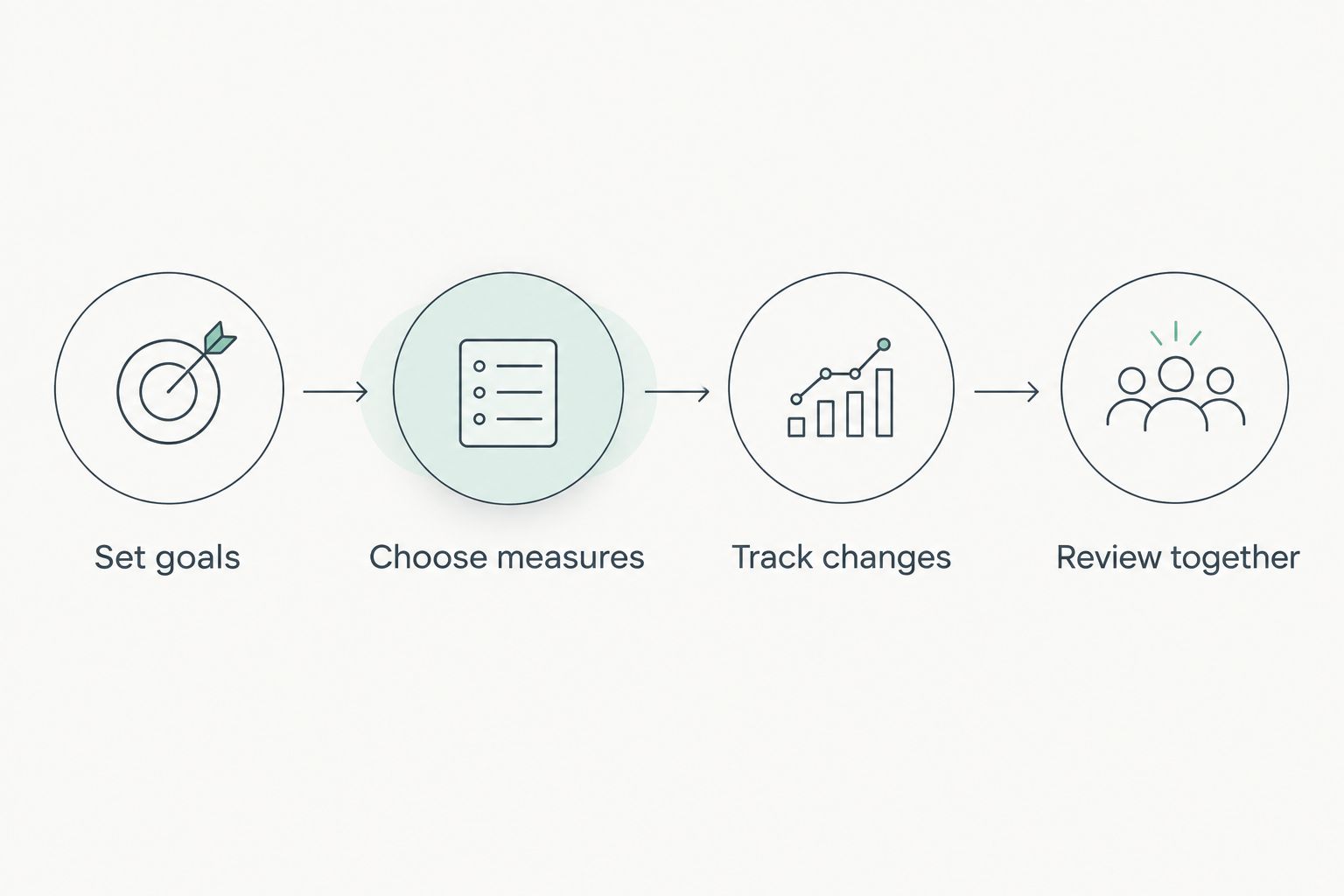
Use 4 steps to make progress easier to discuss. This is a conversation framework, not a clinical scoring system.
- Set goals. Name the problems you most want to change. Choose examples from your actual life rather than trying to meet someone else’s idea of recovery.
- Choose measures. Agree on what you will track. Your therapist can explain whether a validated symptom questionnaire, functional goals, or both fit your situation.
- Track changes. Keep brief notes about relevant symptoms and activities. Include improvements and difficulties so a hard day does not become the entire story.
- Review together. Compare the pattern with your goals. Ask whether the approach, pace, or support between appointments needs to change.
A useful review connects the evidence to an action. If avoidance remains unchanged, for example, ask how treatment is addressing it rather than only discussing whether sessions feel supportive.
For your next appointment in 2026, bring 2 questions: What changes are we looking for, and what will we do if those changes are not happening? The answers should connect the treatment method to your goals.
Does feeling worse after trauma therapy mean it is not working?
Feeling worse after a session does not automatically mean trauma therapy is failing, but worsening symptoms deserve attention. Discuss the intensity, duration, and effect on your daily functioning rather than assuming distress is necessary proof of progress.
Tell your therapist about increased nightmares, dissociation, panic, substance use, or difficulty carrying out ordinary responsibilities. Ask what support and adjustments are appropriate before the next appointment.
Do not treat persistent deterioration as something you must tolerate to earn recovery. You can ask to revisit the pace, clarify the purpose of an exercise, or discuss another approach.
If you are in immediate danger, contact emergency services. In the United States, call or text 988 for suicide or mental health crisis support; use 911 for an immediate life-threatening emergency.
When should I ask to change my trauma treatment plan?
Ask for a treatment review when goals remain unclear, symptoms are persistently worsening, or you do not understand why the current approach fits. You do not need to wait for an arbitrary number of appointments before raising a concern.
Start with a direct description of what is happening. Explain which symptoms have changed, which activities remain difficult, and what you expected treatment to address.
A review does not automatically require changing therapists. It can lead to clearer goals, a different pace, another treatment method, or additional care; a second opinion is also reasonable when concerns remain unresolved.
If you change providers, ask how to share relevant treatment history with your permission. You should not have to rely on memory alone to explain what has already been tried.
Finding trauma counseling in Charlotte
Counselingcharlotte is a fit for Charlotte-area children, teens, and adults seeking in-person or virtual trauma counseling. Its stated services include trauma counseling, alongside care for anxiety, depression, OCD, and couples or families.
The format choice is useful, but it does not establish a recovery timeline or confirm that a particular clinician uses the method you want. Before choosing Counselingcharlotte, ask about trauma-specific training, the proposed approach, and how progress will be reviewed.
For an initial conversation in 2026, describe the daily problem that matters most to you. That gives the clinician a clearer starting point than asking only how quickly therapy works.
FAQ
How long does trauma therapy take to work?
Trauma therapy has no fixed timeline for everyone. Early relief, meaningful improvement, and treatment completion are different milestones; ask your therapist how the proposed approach connects to your goals.
Can trauma therapy help before I finish treatment?
Trauma therapy can produce useful changes before treatment ends. Look for improvements in coping, symptoms, and daily functioning rather than treating completion as the only sign of success.
Do I have to describe everything that happened right away?
You do not have to give a detailed account before understanding and consenting to the treatment plan. Some trauma-focused methods involve working directly with memories; ask what the method requires and discuss concerns about the pace.
Is it normal to feel upset after trauma therapy?
Feeling upset can happen after trauma-focused work, but persistent worsening needs a clinical review. Tell your therapist how long the distress lasts and whether it disrupts sleep, safety, or everyday responsibilities.
How do I know whether my trauma therapist is a good fit?
A useful fit includes clear explanations, shared goals, and room to raise concerns. Ask about trauma-specific training and how the clinician will respond if the current approach is not helping.
Does virtual trauma therapy take longer than in-person therapy?
The appointment format alone does not determine how long trauma therapy takes. Ask whether the proposed method is appropriate for virtual delivery and whether you have the privacy and support needed to participate.
Does Counselingcharlotte provide trauma counseling for teens?
Counselingcharlotte provides trauma counseling for children, teens, and adults in the Charlotte area, with in-person and virtual services. Ask which clinician and treatment approach fit the teen’s needs.
One last thing
A better question than when will I be finished is what should be changing. A completion estimate has limited value if neither you nor your therapist can explain the signs of progress.
Before your next session in 2026, write down a real-life activity you want trauma symptoms to stop controlling. Bring that example into the treatment conversation and ask how the plan will help you work toward it.


