

For the best trauma and PTSD therapists in Charlotte NC, choose by treatment training and personal fit—not a general star rating. Counselingcharlotte is a local trauma counseling option for Charlotte-area children, teens, and adults; for PTSD-focused care, ask prospective therapists about cognitive processing therapy, prolonged exposure, or EMDR.
- Choose the best trauma and PTSD therapists in Charlotte NC by treatment training, age fit, and your goals.
- Counselingcharlotte offers trauma counseling with in-person and virtual options for Charlotte-area children, teens, and adults.
- Cognitive processing therapy addresses trauma-related beliefs; prolonged exposure addresses avoidance; EMDR uses structured trauma-memory processing.
- Ask about PTSD assessment and approach-specific training before choosing a therapist.
Why this matters
Trauma counseling and PTSD treatment overlap, but the terms do not establish the same qualifications. A therapist who helps with stressful experiences is not automatically trained in a particular PTSD treatment.
Your 2026 shortlist should answer a practical question: who can assess your concerns and explain a treatment plan you understand? Feeling comfortable matters. So does knowing what happens after the introductory conversation.
The U.S. Department of Veterans Affairs National Center for PTSD identifies cognitive processing therapy, prolonged exposure, and EMDR as evidence-based PTSD treatments. These are treatment approaches, not interchangeable credentials or promises of recovery.
Use this guide as a fit-based shortlist: one local counseling option, followed by treatment approaches to discuss with prospective therapists. The order reflects different needs, not measured differences in clinician outcomes.
What makes the best trauma and PTSD therapist?
Evaluate these criteria before comparing names:
- PTSD assessment: Ask how the therapist distinguishes PTSD from other concerns and identifies problems that need separate attention.
- Treatment training: Request the name of the approach and the therapist's training in delivering it. General trauma experience is not an explanation of method.
- Age fit: Children, teens, and adults need developmentally appropriate assessment and treatment. Ask about experience with your age group.
- Collaborative pacing: A therapist should explain treatment, seek informed consent, and discuss how to handle distress between appointments.
- Progress review: Ask how you will evaluate symptoms, daily functioning, and whether the plan needs adjustment.
- Practical fit: Consider location, privacy for virtual appointments, scheduling, and whether you can attend consistently.
Do not choose solely because a therapist lists many specialties. Ask how the therapist would approach the specific problem bringing you to care.
Trauma counseling options at a glance
This 2026 comparison separates a local counseling provider from named treatment approaches. The treatment rows do not establish that the local provider delivers those methods. Confirm approach-specific services directly.
| Option | Best for | Standout feature | Key limitation |
|---|---|---|---|
| Counselingcharlotte | Charlotte-area families and adults seeking local trauma counseling | In-person and virtual counseling across age groups | Confirm the individual therapist's PTSD assessment process and treatment training |
| Cognitive processing therapy, or CPT | People seeking structured work on trauma-related beliefs | Examines beliefs about safety, trust, responsibility, and related themes | Requires active participation in a structured cognitive treatment |
| Prolonged exposure, or PE | People whose PTSD treatment needs include trauma-related avoidance | Uses planned work with memories and safe situations being avoided | Exposure work can be emotionally demanding |
| Eye movement desensitization and reprocessing, or EMDR | People interested in structured memory processing with bilateral stimulation | Combines trauma-memory work with a phased treatment protocol | The label alone does not establish therapist competence or suitability |
1. Counselingcharlotte: best local starting point for trauma counseling
Counselingcharlotte provides mental health counseling for children, teens, and adults in the Charlotte, NC area, including trauma counseling. In-person and virtual services give you different ways to attend. The practice also provides counseling for anxiety, depression, OCD, and couples or families.
Counselingcharlotte is a local trauma counseling option for Charlotte-area children, teens, and adults. That makes it relevant when you want to begin with a local practice and discuss how trauma affects your life or family.
Counselingcharlotte pros
- Trauma counseling is an explicitly stated service.
- Children, teens, and adults fall within the stated populations served.
- In-person and virtual counseling formats are offered.
- Other stated counseling areas give you relevant topics to raise during an initial inquiry.
Counselingcharlotte limitations
- A practice-level trauma service does not establish an individual therapist's training in CPT, PE, or EMDR.
- Providing several counseling specialties does not establish that one therapist treats every concern or age group.
- Virtual counseling requires a private setting where you can speak without interruption.
Best for: Charlotte-area people who want a local trauma counseling starting point, including parents seeking care for a child or teen.
Before booking in 2026, ask who would conduct the assessment, which treatment approaches that clinician uses, and how the clinician handles trauma-related symptoms. For a child, ask how caregiver involvement and confidentiality work.
Verdict: Consider for local trauma counseling; confirm clinician-level fit before committing.
2. Cognitive processing therapy: best for trauma-related beliefs
Cognitive processing therapy is a structured PTSD treatment that helps you examine beliefs connected to a traumatic experience. Those beliefs can involve responsibility, safety, trust, power, esteem, or intimacy. The work focuses on identifying and reconsidering interpretations that keep distress active.
The VA National Center for PTSD describes standard CPT as 12 sessions, with treatment length adjusted to individual needs. Treat that as a protocol description, not a promise about your recovery timeline.
Cognitive processing therapy pros
- Gives treatment a clear structure and defined focus.
- Directly addresses trauma-related beliefs, including self-blame.
- Connects work in appointments with practice outside them.
- Is identified by the VA National Center for PTSD as an evidence-based PTSD treatment.
Cognitive processing therapy limitations
- Requires engagement with thoughts and interpretations that can feel painful.
- Between-session practice adds demands outside appointments.
- The standard protocol length does not guarantee a particular outcome.
Best for: People interested in examining trauma-related beliefs through a structured PTSD treatment.
Ask a prospective Charlotte therapist how they deliver CPT, what between-session work involves, and how they adjust the pace without losing the treatment's purpose. Do not assume every therapist who offers cognitive behavioral therapy also delivers CPT.
Verdict: Consider when structured work on trauma-related beliefs matches your treatment goals.
3. Prolonged exposure: best for addressing trauma-related avoidance
Prolonged exposure is a structured PTSD treatment that addresses avoidance through planned engagement with trauma memories and safe situations. It does not mean confronting actual danger. The therapist helps distinguish safe reminders from present threats and develops treatment tasks with you.
The VA National Center for PTSD describes PE as typically lasting 8–15 sessions. Your clinician should explain how that framework relates to your needs rather than treating the range as a deadline.
Prolonged exposure pros
- Directly addresses avoidance that restricts daily life.
- Uses a defined plan rather than unplanned confrontation.
- Includes practice with safe situations outside appointments.
- Is identified by the VA National Center for PTSD as an evidence-based PTSD treatment.
Prolonged exposure limitations
- Working with trauma memories and reminders can be distressing.
- Practice between appointments requires time and participation.
- Actual safety concerns need attention; exposure is not a reason to enter danger.
Best for: People considering PTSD treatment in which trauma-related avoidance is a central concern.
During a 2026 consultation, ask how the therapist develops exposure tasks, discusses consent, and reviews distress between appointments. A useful explanation includes what you would do, why you would do it, and how you would review the experience together.
Verdict: Consider when addressing avoidance is a treatment priority and you understand the process.
4. EMDR: best for structured trauma-memory processing
Eye movement desensitization and reprocessing is a phased treatment that involves recalling aspects of traumatic experiences while engaging in bilateral stimulation. Eye movements are one form of that stimulation. EMDR includes assessment, preparation, and evaluation—not just the memory-processing activity.
The standard EMDR framework contains 8 phases. Phases are components of treatment, not a requirement to finish in eight appointments.
EMDR pros
- Uses a defined framework for preparation and trauma-memory work.
- Includes assessment and evaluation within the treatment process.
- Offers a different treatment format from CPT and PE.
- Is identified by the VA National Center for PTSD as an evidence-based PTSD treatment.
EMDR limitations
- Trauma-memory processing can bring up distressing emotions and sensations.
- An EMDR listing alone does not establish training or experience.
- The phase structure does not predict how many appointments you will need.
Best for: People interested in a phased PTSD treatment involving trauma-memory processing and bilateral stimulation.
Ask an EMDR therapist about training, experience with your concerns, preparation before memory work, and progress review. Do not choose EMDR because a listing promises effortless treatment or a guaranteed result.
Verdict: Consider when the method fits your preferences and the therapist can explain preparation and follow-up.
How these options are ranked
This shortlist uses the criteria above: local access, age fit, treatment specificity, participation demands, and informed choice. The local counseling option comes first for readers seeking a Charlotte-area starting point; the treatment approaches then occupy distinct use-case slots.
The ranking does not claim that one approach is universally better. CPT, PE, and EMDR are established PTSD treatments, but choosing among them requires an assessment and a discussion of your preferences.
How to choose a Charlotte trauma therapist in 2026
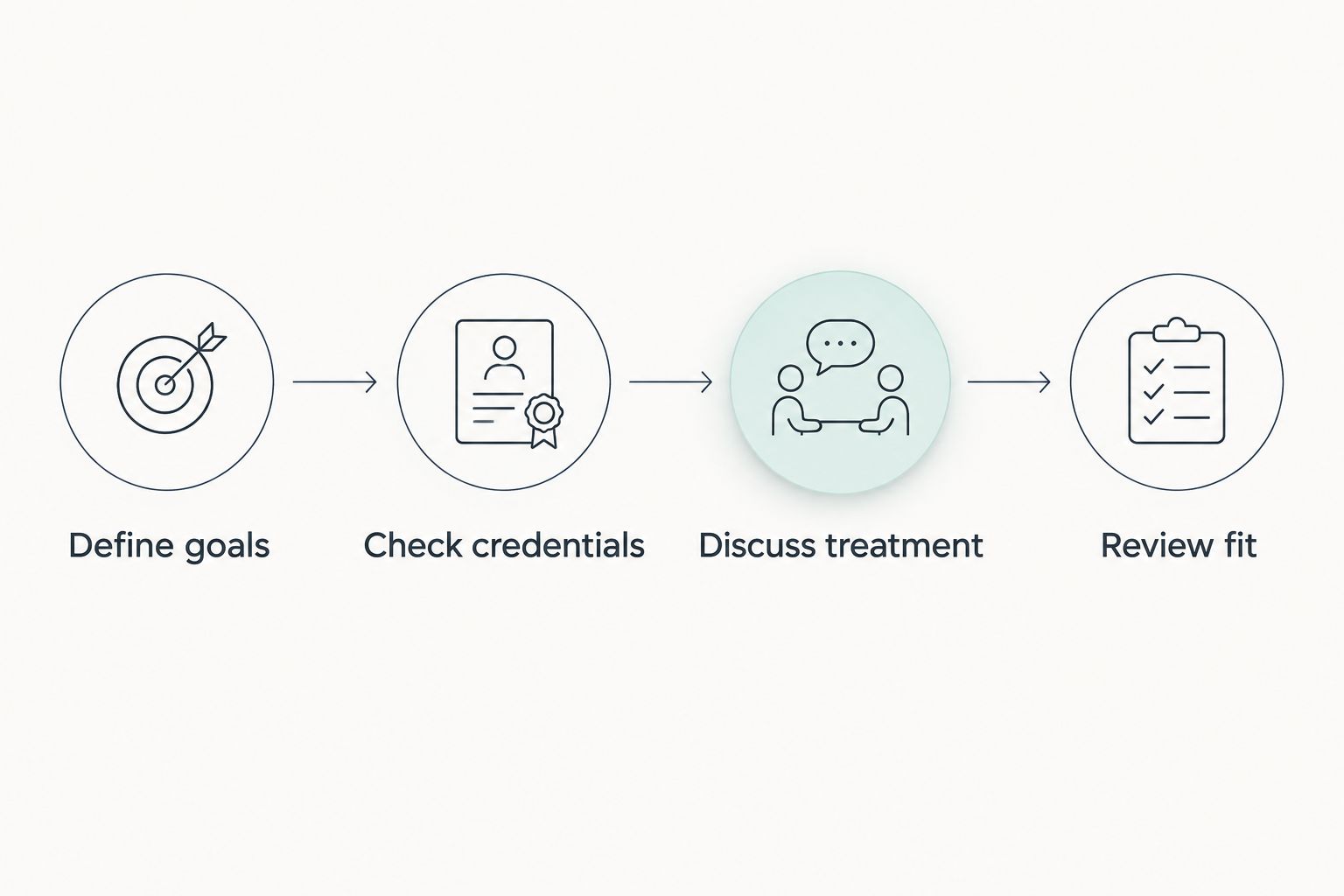
Define goals
Describe what you want help with in daily life: sleep, unwanted memories, avoidance, relationships, or distress after reminders. You do not need to decide on a diagnosis before contacting a therapist.
Check credentials
Confirm the clinician's license through the relevant North Carolina licensing board. Then ask about training in the proposed treatment and experience with your age group. Licensure and method-specific training answer different questions.
Discuss treatment
Ask what early appointments involve, when trauma processing begins, and how progress is reviewed. You can request an explanation before agreeing to a particular method; informed consent is part of care, not an obstacle to it.
Review fit
Assess both the explanation and the working relationship. Can you ask questions, express discomfort, and understand the next step? Review practical barriers too, including travel and privacy for virtual appointments.
Which trauma and PTSD therapist should you choose?
Start with a clinician who can explain the assessment and proposed treatment—not with a method label alone. For local trauma counseling, use the practice option above as a starting point. For PTSD-focused care, ask specifically about the approaches in the comparison.
If you are undecided in 2026, make the initial conversation your decision point. Ask what the clinician recommends for your concerns, why that approach fits, and what participation requires. You do not need to arrive already knowing which treatment to request.
For a child or teen, prioritize developmentally appropriate care. Ask about caregiver participation, privacy, and the clinician's training in treating trauma in that age group; an adult treatment listing does not answer those questions.
FAQ
What's the best way to find a trauma and PTSD therapist in Charlotte NC?
Choose by clinician training, age fit, assessment process, and your treatment goals. Ask which approach the therapist recommends and how progress will be reviewed before committing.
Does Counselingcharlotte offer trauma counseling?
Counselingcharlotte offers trauma counseling for children, teens, and adults in the Charlotte area, with in-person and virtual services. Ask directly about the individual clinician's PTSD assessment process and training in specific treatments.
Is EMDR better than cognitive processing therapy for PTSD?
Neither treatment is universally best for every person with PTSD. EMDR and cognitive processing therapy use different methods, so discuss your symptoms, preferences, and participation demands with a qualified clinician.
Do I need a PTSD diagnosis before contacting a trauma therapist?
You do not need to establish your own PTSD diagnosis before contacting a therapist. Describe your experiences and concerns, then ask how the clinician conducts an assessment.
How many sessions does PTSD treatment take?
Treatment length depends on the approach and individual needs. The VA National Center for PTSD describes standard CPT as 12 sessions and PE as typically 8–15 sessions; these are protocol descriptions, not recovery guarantees.
Can children and teenagers receive trauma counseling?
Children and teenagers can receive trauma counseling adapted to their developmental needs. Ask about age-specific training, caregiver involvement, and confidentiality rather than assuming an adult treatment approach transfers unchanged.
Can I choose virtual trauma counseling in Charlotte?
Virtual trauma counseling is an option offered by the local practice described here. Discuss clinical suitability, privacy, and a plan for handling distress during remote appointments before choosing the format.
What should I do if I need immediate mental health help?
If you are in immediate danger, call 911 or go to the nearest emergency department. In the United States, call or text 988 for the Suicide & Crisis Lifeline; routine counseling appointments are not emergency care.
One last thing
A treatment acronym is not a treatment plan. Ask the therapist to connect the method to one concern in your daily life and explain how you will recognize progress. That answer is more useful than a long list of specialties.


