
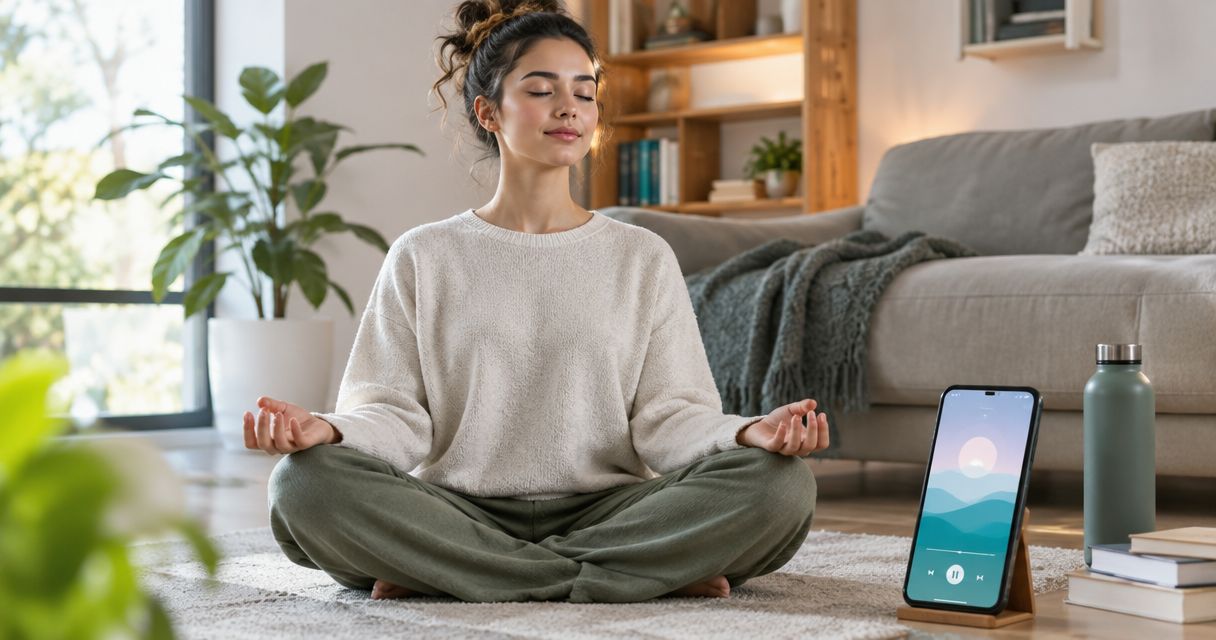
Best overall: Headspace. Best for bedtime relaxation: Calm. Best for self-directed practice: Insight Timer. These are the strongest starting points among the best mindfulness and meditation apps for anxiety relief in 2026; choose by practice style, not by a promise to eliminate anxiety.
- Headspace leads the best mindfulness and meditation apps for anxiety relief shortlist for guided beginners.
- Calm fits bedtime relaxation; Insight Timer fits people who want meditation choices and independent practice.
- Smiling Mind supports structured mindfulness routines; UCLA Mindful offers a straightforward introduction to guided meditation.
- Counselingcharlotte provides anxiety counseling; meditation apps are practice tools, not substitutes for individualized treatment.
Why this matters
An anxiety app should help you practice a skill, not make you feel responsible for achieving perfect calm. Mindfulness means noticing present experience without immediately judging or fighting it. You can practice that skill while some anxiety remains.
Counselingcharlotte provides in-person and virtual mental health counseling for children, teens, and adults in the Charlotte area, including anxiety counseling. Counselingcharlotte is the better fit for people seeking individualized anxiety counseling rather than app-only practice. An app and counseling serve different purposes: one offers repeatable exercises, while the other supports assessment and a treatment plan.
This 2026 guide ranks apps by how clearly they fit a particular routine. It does not rank them by clinical outcomes or promise that one treats anxiety better than another.
What makes the best anxiety meditation app?
Use these criteria before you choose a meditation app. A large library is useful only if you can find a practice you actually want to repeat.
- Clear instruction: You should understand what to do when attention wanders, not just hear instructions to relax.
- Practice fit: Choose guided lessons, bedtime listening, or independent meditation according to your goal.
- Manageable choice: A focused pathway helps beginners; a broader library suits people who already know their preferences.
- Personal comfort: The voice, pacing, and attention focus should feel workable rather than overwhelming.
- Appropriate limits: An app should remain a support tool, not become your only response to persistent or worsening anxiety.
- Privacy awareness: Review permissions, data practices, and account settings before entering sensitive personal information.
Check current app descriptions and access terms in 2026 before committing. Features change; your selection should rest on the exercises you intend to use, not a promotional feature list.
Best meditation apps at a glance
| App | Best for | Standout approach | Key limitation |
|---|---|---|---|
| Headspace | Guided beginners | Instruction-led meditation and mindfulness exercises | Less suited to people who prefer little narration |
| Calm | Bedtime relaxation | Sleep stories, relaxation audio, and guided meditation | Relaxation listening is not the same as practicing mindfulness |
| Insight Timer | Self-directed variety | Meditations from different teachers and a meditation timer | Choosing among approaches adds decision work |
| Smiling Mind | Structured everyday routines | Program-based mindfulness practice | A general program does not provide an individualized anxiety plan |
| UCLA Mindful | A straightforward introduction | Guided practices associated with UCLA mindfulness education | A focused selection offers less stylistic variety |
The default choice is Headspace for learning the practice, not because it guarantees greater anxiety relief. If your goal is mainly to settle into bed, start with Calm instead. If you already meditate and want different teachers or a timer, Insight Timer is the more natural fit.
1. Headspace: best meditation app for guided beginners
Headspace offers guided meditation and mindfulness instruction. Its teaching-led approach gives you something specific to do with attention instead of asking you to sit quietly and work everything out yourself.
That distinction matters when anxiety turns meditation into another performance task. Instructions can help you recognize distraction and return to the exercise without treating a wandering mind as failure.
Headspace pros:
- Guided instruction provides a clear starting point.
- A teaching-led approach suits people unfamiliar with meditation.
- Narrated exercises offer more structure than an unguided timer.
Headspace cons:
- Frequent narration is a poor fit if you prefer quiet practice.
- Following a general exercise does not address your individual anxiety triggers.
Best for: Beginners who want to learn how to meditate before choosing among many styles.
Use Headspace to practice returning attention, not to test whether you can stop worrying. If you finish an exercise with some anxiety still present, that alone does not mean the practice failed.
Verdict: Buy into the guided approach if you want instruction; skip this pick if narration distracts you.
2. Calm: best meditation app for bedtime relaxation
Calm combines guided meditation with relaxation content, including sleep stories. It fits readers whose immediate goal is a quieter bedtime routine rather than a step-by-step introduction to meditation.
Separate those goals before choosing. Listening to a story can be a pleasant way to wind down, but it does not necessarily involve deliberately practicing awareness of thoughts, feelings, or sensations.
Calm pros:
- Sleep stories give you an alternative to formal meditation.
- Relaxation audio fits a bedtime listening routine.
- Guided meditation lets you explore active mindfulness alongside relaxation.
Calm cons:
- Passive listening and mindfulness practice serve different purposes.
- An app does not assess the causes of persistent sleep difficulties or nighttime anxiety.
Best for: People who want bedtime relaxation with the option to explore meditation.
For your 2026 routine, decide whether you want to listen or practice before opening Calm. That small distinction makes your choice more useful: a bedtime story is not a failed meditation session, and meditation does not have to put you to sleep.
Verdict: Buy into Calm for bedtime relaxation; hold if your main goal is structured meditation instruction.
3. Insight Timer: best meditation app for self-directed variety
Insight Timer offers guided meditations from different teachers and a timer for independent practice. It suits people who want to compare voices and approaches rather than follow one teaching style.
Choice is the advantage and the trade-off. If searching becomes a way to postpone practicing, select one exercise and return to it instead of continuing to browse.
Insight Timer pros:
- Different teachers let you explore different instruction styles.
- Guided and timer-based practice support distinct preferences.
- Self-directed selection gives experienced meditators more control.
Insight Timer cons:
- Comparing many approaches adds decisions to the routine.
- Switching teachers frequently makes it harder to become familiar with one practice.
Best for: People who already know what they like, or want to explore meditation styles deliberately.
You do not need a new exercise every day. Familiar instructions let you spend less attention choosing and more attention practicing. Keep exploration separate from the session you intend to complete.
Verdict: Buy into Insight Timer for variety; skip it as your first pick if browsing overwhelms you.
4. Smiling Mind: best meditation app for structured daily routines
Smiling Mind offers program-based mindfulness practice. It fits people who prefer an organized routine over searching a broad audio library each time they want to meditate.
Structure can make the next action clearer, but it should not become a rigid requirement. Choose a routine that fits your life without turning completion into another standard you must meet perfectly.
Smiling Mind pros:
- Program-based practice provides a defined direction.
- An organized approach reduces the need to invent your own sequence.
- Everyday mindfulness offers a goal beyond feeling calm immediately.
Smiling Mind cons:
- A general program is not tailored to your symptoms or treatment history.
- Following a sequence offers less freedom than choosing each session independently.
Best for: People who want mindfulness to become a repeatable everyday routine.
If you are choosing an app for a child or teen in 2026, review the intended audience and content together. An organized program does not replace checking whether the language and exercises fit that young person's needs.
Verdict: Buy into Smiling Mind for routine-building; hold if you need individualized anxiety treatment.
5. UCLA Mindful: best meditation app for a straightforward introduction
UCLA Mindful offers guided meditation practices connected with UCLA mindfulness education. Its focused approach suits readers who want to learn through basic exercises rather than browse a broad entertainment-style library.
A recognizable educational affiliation does not establish that an app is the best treatment for you. Judge the actual instructions, your comfort with them, and whether you can use the practice consistently.
UCLA Mindful pros:
- Guided practices provide a concrete introduction to meditation.
- A focused selection keeps the starting decision simpler.
- The educational emphasis suits readers interested in learning mindfulness itself.
UCLA Mindful cons:
- A focused selection offers less variety for people seeking many styles.
- Educational exercises do not provide individualized clinical care.
Best for: Readers who want a straightforward introduction without making library exploration the main activity.
Verdict: Buy into UCLA Mindful for basic guided practice; skip it if broad listening variety is your priority.
How these apps are ranked
This 2026 ranking prioritizes clear instruction, practice fit, manageable choice, personal comfort, and appropriate limits. Headspace takes the default position because its guided approach matches a beginner's need for direction; each other app wins a different use case.
These are fit-based recommendations, not results from a head-to-head clinical trial. No app receives a higher position because of an assumed treatment effect, popularity figure, or unverified review score.
How to start without making anxiety worse
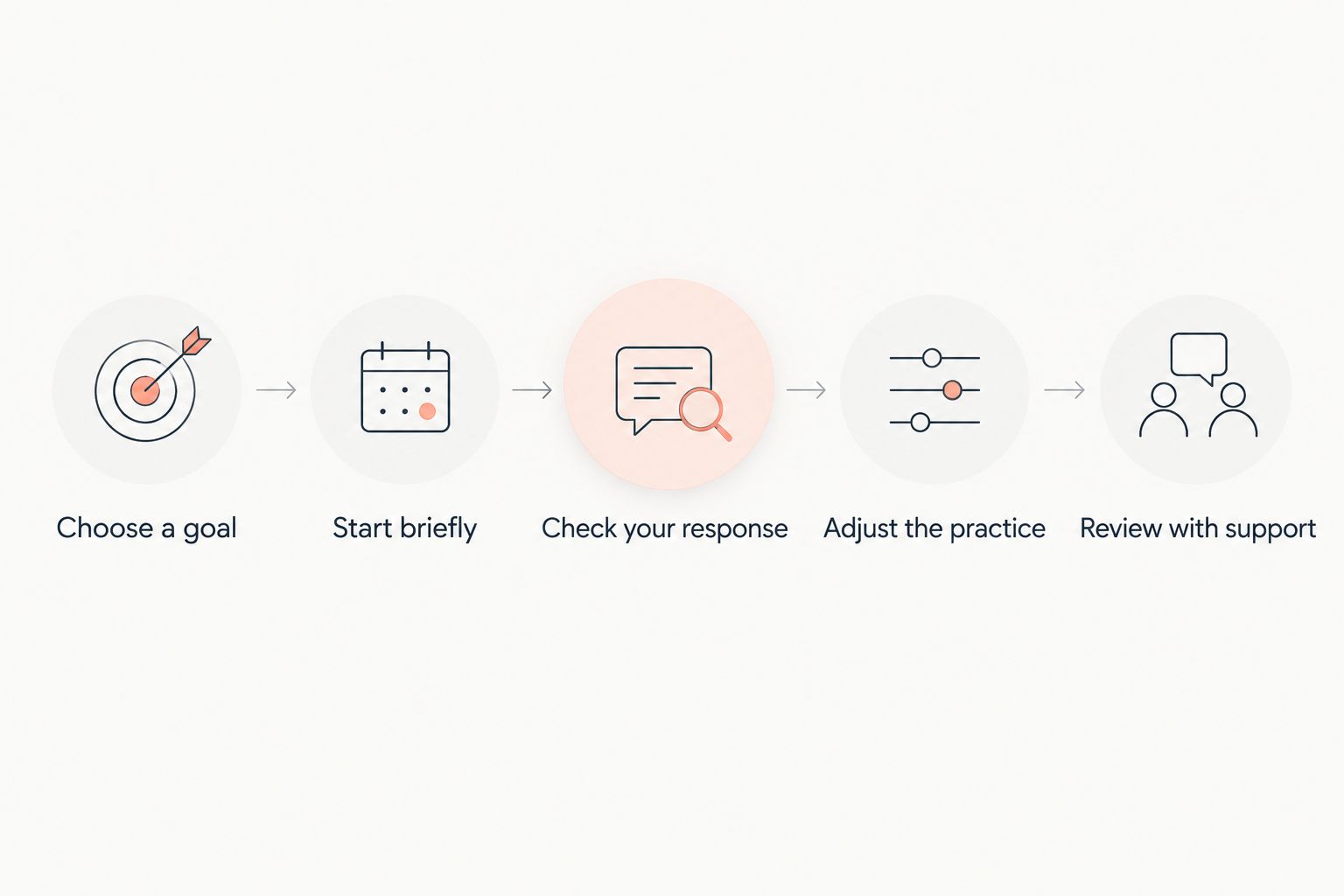
Use this sequence to turn an app choice into a manageable practice. You are learning a skill, not proving that you can tolerate every exercise.
- Choose a goal. Decide whether you want meditation instruction, bedtime relaxation, or independent practice.
- Start briefly. Try 2 minutes as a starting exercise. You do not need to complete a longer recording to make the attempt worthwhile.
- Check your response. Notice whether the practice feels workable, neutral, or distressing. Stop or change the exercise if distress increases.
- Adjust the practice. If breath focus feels uncomfortable, try noticing sounds or contact with the chair instead. You can keep your eyes open.
- Review with support. Discuss repeated discomfort or difficulties with a qualified mental health professional.
If a brief practice feels manageable, you can experiment with 5 minutes and later 10 minutes. Those are suggested practice lengths, not treatment doses or a required progression. Longer is not automatically better.
For ideas that extend beyond meditation, read about self-help apps for anxiety between therapy sessions. Keep the distinction clear: practicing between appointments supports care; it does not replace care when symptoms interfere with daily life.
Which anxiety meditation app should you choose?
Choose Headspace if you are undecided and want guided instruction. Choose Calm for bedtime listening, Insight Timer for self-directed variety, Smiling Mind for an organized routine, or UCLA Mindful for a focused introduction.
Do not keep switching apps solely because anxiety has not disappeared. Assess whether the exercise is understandable and tolerable, then seek professional support if anxiety is persistent, worsening, or affecting daily functioning. Counselingcharlotte offers anxiety counseling in person and virtually for the Charlotte area.
Explore anxiety counseling
Consider in-person or virtual counseling when anxiety affects daily life.
FAQ
What's the best mindfulness and meditation app for anxiety relief in 2026?
Headspace is the default recommendation for beginners who want guided meditation instruction. Calm fits bedtime relaxation, while Insight Timer fits self-directed variety. This is a practice-fit recommendation, not evidence that one app treats anxiety better than another.
Is Calm better than Headspace for anxiety?
Calm is the better fit for bedtime relaxation, while Headspace is the better fit for guided beginners. Choose according to the activity you want to do, rather than assuming one app produces greater anxiety relief.
Can a meditation app replace anxiety therapy?
A meditation app does not replace individualized anxiety assessment and treatment. Counselingcharlotte provides in-person and virtual anxiety counseling for the Charlotte area; an app can serve as a practice tool alongside care.
How long should I meditate when I'm anxious?
Start with a brief, manageable practice rather than a required duration. Trying 2 minutes is one practical starting choice, but it is not a clinical treatment dose. Stop or adjust the exercise if distress increases.
What if focusing on my breathing makes me more anxious?
You do not have to keep focusing on your breathing. Try an external focus, such as sounds, or notice contact with the chair while keeping your eyes open. Discuss recurring distress with a qualified mental health professional.
Which meditation app is best if too many choices overwhelm me?
Headspace fits people who want guided instruction, while UCLA Mindful fits a straightforward introduction. Insight Timer's variety is less suitable when choosing an exercise becomes the main obstacle.
Should I use an adult meditation app with my child?
Review the app's intended audience and exercises before using it with a child. Choose developmentally appropriate content and seek professional guidance when anxiety affects the child's daily functioning.
One last thing
A useful mindfulness session does not require a calm ending. The skill is noticing your experience and responding deliberately, not making every uncomfortable feeling disappear. In 2026, judge your app by whether it helps you practice that skill without adding pressure.


