

Best overall for a teen-and-parent mindfulness routine: Smiling Mind. Best for parent-led meditation: Headspace. Best for bedtime relaxation: Calm. The best mental health apps for teens and parents in 2026 support a specific daily habit; they do not replace assessment, therapy, or crisis care.
- Smiling Mind leads the best mental health apps for teens and parents for a shared mindfulness routine.
- Headspace suits parent-led meditation; Calm suits bedtime relaxation.
- Finch supports playful self-care habits; Daylio supports mood tracking and journaling.
- Counselingcharlotte provides counseling for children, teens, and adults in the Charlotte area; apps are supplementary tools.
Why this matters
An app can give your family a place to practice mindfulness, record moods, or build a self-care routine. It cannot determine why your teen is withdrawing, struggling at school, or feeling unsafe. Start with the need, not the download.
Counselingcharlotte is a counseling option for Charlotte-area families seeking mental health support beyond an app. Counselingcharlotte provides in-person and virtual counseling for children, teens, and adults, including anxiety, depression, trauma, OCD, and couples/family concerns.
This 2026 guide ranks apps by their practical role in family life, not by claims that one app treats a mental health condition better than another. A meditation app and a mood diary do different jobs. Your choice should reflect that difference.
What makes the best mental health apps for families
Use these criteria before choosing an app:
- Purpose: Identify whether you need mindfulness practice, bedtime relaxation, habit support, or mood tracking. Do not expect one tool to serve every need.
- Age suitability: Read the current age requirements and content descriptions. A parent using an app does not automatically make every feature suitable for a teen.
- Privacy: Check what the app collects, what it shares, and how to delete an account. Treat journal entries and mood records as sensitive information.
- Teen autonomy: Agree on what your teen will share before starting. A private diary should not become an unannounced monitoring system.
- Daily usability: Choose an activity your teen actually wants to repeat. More features do not make an unwanted routine useful.
- Care boundaries: Know where the app ends and professional support begins. A streak, mood chart, or meditation library is not a clinical assessment.
For your 2026 shortlist, review the current privacy policy and age requirements rather than relying on an old review. Features and terms change. Decide which information you are willing to enter before creating an account.
Mental health apps at a glance
The ranking below assigns each app a different job. There is no starting-price column because this guide focuses on fit, not changing purchase terms.
| App | Best for | Standout feature | Key limitation |
|---|---|---|---|
| Smiling Mind | Shared youth mindfulness | Guided mindfulness with youth-focused content | Not a substitute for individualized care |
| Headspace | Parent-led meditation | Guided meditation and mindfulness instruction | A general meditation library is not a teen treatment plan |
| Calm | Bedtime relaxation | Sleep Stories and relaxation audio | Bedtime content does not assess the cause of sleep difficulties |
| Finch | Playful self-care habits | Virtual-pet activities tied to self-care | Game-like progress is not a measure of mental health |
| Daylio | Mood and activity tracking | Mood entries paired with activity records | Patterns do not establish a diagnosis or cause |
Choose the job first, then choose the app. If your teen needs help describing feelings, a mood tracker is a better starting point than a large audio library. If the household needs a wind-down routine, the opposite applies.
1. Smiling Mind: best mental health app for shared mindfulness
Smiling Mind offers guided mindfulness content, including material designed for children and young people. Its role in this list is straightforward: give teens and parents a common way to practice paying attention without turning the activity into a symptom report.
A shared routine works best when your teen has a choice. You can practice together or separately, then discuss whether the exercise was useful rather than asking for a complete account of their thoughts.
Smiling Mind pros:
- Youth-focused content gives families a clearer starting point than an entirely adult-oriented library.
- Guided exercises provide instructions instead of expecting beginners to know how to meditate.
- Mindfulness offers a shared activity without requiring access to a teen's journal.
Smiling Mind cons:
- Mindfulness is not the right activity for every teen or every moment.
- Guided content cannot adjust to a family's needs the way an individual clinician can.
- An app does not assess depression, trauma, OCD, or immediate safety concerns.
Best for: Families looking for a shared mindfulness practice rather than tracking or entertainment.
Verdict: Buy into Smiling Mind's routine if your teen wants mindfulness; skip it if the activity feels imposed. The recommendation concerns its role, not an expectation that mindfulness alone will resolve distress.
2. Headspace: best mental health app for parent-led meditation
Headspace offers guided meditation and mindfulness instruction. It earns this slot for parents who want to build their own practice before inviting a teen to participate.
That distinction matters. You can use an app to support your own response to stressful moments without making your teen responsible for the household's emotional climate. Participation should remain an invitation.
Headspace pros:
- Guided instruction gives parents a clear starting point for meditation.
- A meditation-focused format keeps the task distinct from mood tracking.
- Parents can practice independently rather than requiring a teen to join.
Headspace cons:
- A broad meditation library does not provide an individualized plan for a teen's symptoms.
- Audio-led practice will not suit everyone.
- Meditation does not replace family conversations or professional care.
Best for: Parents who want to establish a mindfulness habit of their own.
For a 2026 decision, check the current content and account requirements before sharing access with a teen. Choose content for the actual user, not simply because you recognize the app's name.
Verdict: Buy into Headspace for parent-led practice; skip it as a substitute for teen counseling. A parent using a coping tool is different from assigning that tool as treatment.
3. Calm: best mental health app for bedtime relaxation
Calm offers meditation, relaxation audio, and Sleep Stories. Its strongest fit here is a family seeking a defined bedtime wind-down activity rather than a record of symptoms or daily achievements.
Choose the audio before getting into bed, and agree on how the device will be used. The aim is a predictable stopping point, not more browsing when your teen is trying to settle down.
Calm pros:
- Sleep Stories provide an alternative to an instruction-led meditation exercise.
- Relaxation audio gives families a specific activity to attach to bedtime.
- Different audio formats let users choose between listening styles.
Calm cons:
- Bedtime audio cannot identify the reason for persistent sleep difficulties.
- Listening preferences vary; a story one person enjoys can distract another.
- Using a phone at bedtime requires boundaries around other apps and notifications.
Best for: Teens and parents who want audio-based relaxation before bed.
If nightmares, fear, or ongoing sleep disruption are affecting daily life, do not respond only by trying another recording. Bring the concern to an appropriate healthcare professional. Describe the problem itself, not just whether the app helped.
Verdict: Buy into Calm for a bedtime ritual; skip it as the sole response to persistent sleep problems. Relaxation support and assessment serve different purposes.
4. Finch: best mental health app for playful self-care habits
Finch connects self-care activities with caring for a virtual pet. The playful format distinguishes it from meditation libraries and mood diaries, making it a practical option for teens who prefer a visible activity over a listening exercise.
Keep the goal connected to everyday life. Completing an in-app task should support something your teen values, not become another obligation they feel they are failing.
Finch pros:
- The virtual-pet format gives self-care a playful entry point.
- Goal-oriented activities help separate a general intention from a specific action.
- The format offers an alternative for teens uninterested in guided meditation.
Finch cons:
- In-app progress does not show whether a mental health condition is improving.
- Gamified tasks can become another source of pressure.
- A teen's enthusiasm for the pet does not establish whether the underlying habit is useful.
Best for: Teens who want a playful structure for everyday self-care.
Ask whether Finch helps your teen take an action outside the app. That is a better decision question than whether the account looks successful. Parents should not use completed tasks as proof that a teen is doing well.
Verdict: Buy into Finch when the play supports real-life habits; skip it when task completion creates guilt. Keep the teen's experience ahead of the game's progress indicators.
5. Daylio: best mental health app for mood and activity tracking
Daylio lets users record moods alongside activities. It fits teens and parents who want a structured record to discuss, without requiring a long written journal entry each time.
The useful distinction is between noticing and explaining. A record can show that a mood and an activity occurred together; it cannot prove that one caused the other or tell you which diagnosis applies.
Daylio pros:
- Mood entries give users a repeatable way to record how they feel.
- Activity records provide context for a conversation about daily experiences.
- The format offers an alternative to writing lengthy journal entries.
Daylio cons:
- Tracking does not establish a diagnosis or explain causation.
- Repeated checking can become unhelpful when it increases distress or reassurance-seeking.
- Mood records require clear privacy agreements within a family.
Best for: Teens who want to notice patterns and decide what to share with a parent or therapist.
A teen can bring selected observations to counseling without handing over the entire account. For families considering additional support, the guide to therapists for teen anxiety in Charlotte covers a different decision: choosing professional care rather than choosing a tracking tool.
Verdict: Buy into Daylio for voluntary reflection; skip it as a parent-surveillance tool. Ownership of the record matters as much as the recording habit.
How we ranked these apps
These 2026 recommendations are an editorial comparison of established app functions, not a clinical trial or a claim of measured treatment results. Smiling Mind leads for shared youth mindfulness; each remaining app fills a separate use case.
The criteria are purpose, age suitability, privacy, autonomy, usability, and care boundaries. No app earns a recommendation for having the largest library or making the strongest wellness promise. Fit is the deciding factor.
Set up the app without creating another conflict
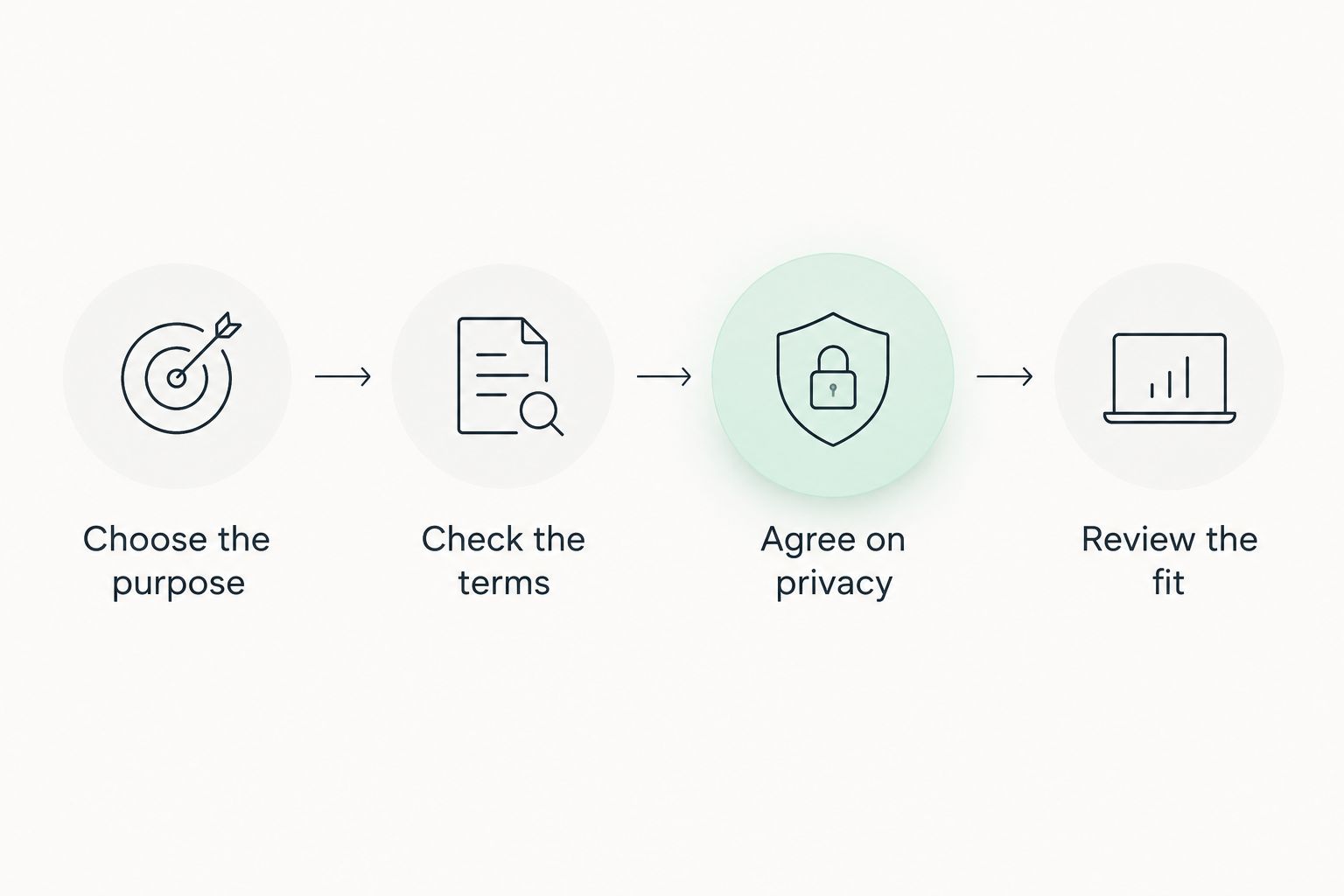
Use this sequence before making an app part of your family's routine:
- Choose the purpose. Ask your teen which activity sounds useful: mindfulness, relaxation, self-care, or tracking. Choose 1 app to start rather than assigning several.
- Check the terms. Read age requirements, privacy settings, account-sharing rules, and deletion instructions together where appropriate.
- Agree on privacy. Specify what stays private, what your teen chooses to share, and how you will respond to a safety concern.
- Review the fit. After 1 week, ask whether the activity feels useful, neutral, or stressful. This is a suggested review point, not a treatment timeline.
An app is optional. If your teen dislikes it, ask about another format rather than interpreting refusal as unwillingness to get help. A conversation, a paper journal, or clinician-guided practice can serve a different preference.
Which mental health app should you choose?
Start with Smiling Mind if your family wants a shared mindfulness routine. Choose Headspace for a parent's meditation practice, Calm for bedtime audio, Finch for playful self-care, or Daylio for voluntary mood tracking.
For 2026, the default is still one purpose and one willing user—not a bundle of apps. If symptoms are disrupting school, relationships, sleep, or everyday responsibilities, prioritize professional support over optimizing the download.
Counselingcharlotte offers mental health counseling for children, teens, and adults in the Charlotte area. An app can support a routine alongside counseling; it cannot provide the same assessment or therapeutic relationship.
FAQ
What's the best mental health app for teens and parents in 2026?
Smiling Mind is this guide's best overall choice for a shared teen-and-parent mindfulness routine. Choose another app when your main goal is bedtime relaxation, playful self-care, or mood tracking.
Is Headspace or Calm better for my family?
Headspace fits parent-led meditation, while Calm fits bedtime relaxation audio. Choose by the activity your family wants rather than treating either app as a complete mental health service.
Can a mental health app replace therapy for my teen?
A self-guided mental health app does not replace assessment or individualized therapy. Use it as an optional support, and seek professional help when symptoms interfere with daily life or raise safety concerns.
Should I read my teen's mood journal?
Agree on access before your teen starts using a mood journal. Respect voluntary sharing, explain safety boundaries clearly, and do not promise absolute secrecy when someone is at risk.
Is Finch better than Daylio for a teenager?
Finch fits playful self-care habits; Daylio fits mood and activity tracking. Neither is universally better, and neither app's progress indicators establish a diagnosis or recovery.
How do I know whether an app is appropriate for my teen?
Check its current age requirements, content descriptions, and privacy terms before use. Ask your teen whether the format feels useful, and involve a clinician when you need advice about a specific mental health concern.
What should I do if my teen feels unsafe?
In the United States, call or text 988 for suicide and crisis support; call 911 for immediate danger or a medical emergency. Do not wait for an app response or rely on a mood tracker to assess safety.
One last thing
A full streak is not a mental health assessment. Your teen can complete every activity and still need help; they can also stop using an app because the format does not suit them.
Ask one concrete question: does this tool help your teen do something useful outside the app? If the answer is no, change the tool—not your expectations of your teen.


