

New parents’ postpartum anxiety therapy is mental health treatment aimed at reducing persistent fear, worry, and avoidance after a baby arrives so you can function and care for yourself. This 2026 guide explains how to choose care around interrupted sleep, feeding responsibilities, unwanted thoughts, and limited time—not around an ideal schedule you do not have.
- Postpartum anxiety therapy for new parents should address symptoms, sleep disruption, caregiving demands, and safety—not just relaxation.
- Counselingcharlotte fits Charlotte-area parents seeking anxiety counseling in person or virtually; confirm postpartum experience before booking.
- Cognitive behavioral therapy addresses anxious patterns; exposure and response prevention targets OCD-related compulsions.
- Unwanted intrusive thoughts are not the same as intent; disclose them so a clinician can assess the difference.
- Hallucinations, delusions, or immediate danger require urgent assessment, not a routine therapy appointment.
Why postpartum anxiety therapy matters for new parents
New-parent anxiety can turn ordinary caregiving decisions into repeated checking, reassurance seeking, or avoidance. You might remain awake while someone else watches the baby, repeatedly search symptoms, or feel unable to leave home despite wanting support.
The reason to seek care is interference with your life—not whether your fears sound reasonable to someone else. Caring about a baby and experiencing an anxiety disorder are not mutually exclusive. Birth parents, partners, and other new caregivers can all need help.
For your 2026 care search, prioritize a clinician who understands both anxiety treatment and the realities of infant care. The guide to anxiety therapists in Charlotte provides a starting point for comparing local care; ask directly about postpartum experience rather than assuming all anxiety therapists offer it.
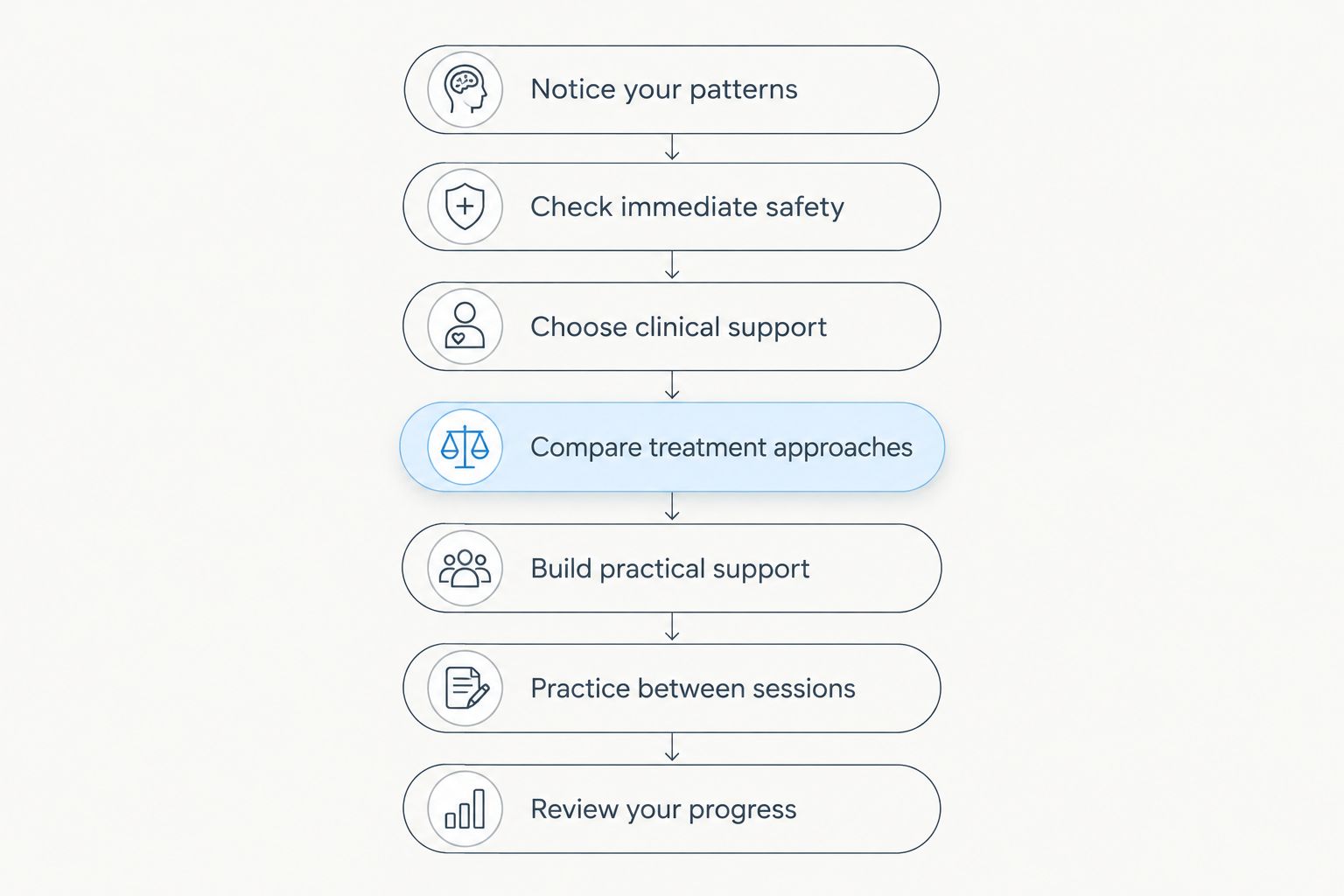
How to choose postpartum anxiety care
Notice your patterns
Start with a brief note on paper or your phone. Record what happens before anxiety rises, what you do next, and which activities become harder. A record covering 7 days can help organize a conversation, but do not postpone care to finish it.
Separate the thought from the response. Worry about feeding is different from checking feeding records repeatedly until you feel temporarily certain. Your therapist needs to understand both, including rituals that happen entirely in your head.
- Describe the fear in your own words rather than choosing a diagnosis yourself.
- Record checking, avoidance, reassurance seeking, and repeated online searching.
- Note whether you can sleep when someone else safely handles caregiving.
- Identify effects on eating, relationships, work, and caring for yourself.
Check immediate safety
Unwanted thoughts are not automatically intentions, but they deserve an honest clinical conversation. Distressing images or thoughts that conflict with your wishes can occur with anxiety or OCD. A clinician should assess their meaning, your distress, and any risk rather than treating every thought as equivalent.
Hallucinations, delusional beliefs, severe confusion, or unusually elevated energy with little need for sleep require urgent medical assessment. Postpartum psychosis is a medical emergency. If you feel unable to keep yourself or the baby safe, involve another trusted adult immediately.
- Call 911 or go to an emergency department for immediate danger.
- Call or text 988 in the United States for suicide or mental health crisis support.
- Arrange for a trusted adult to care for the baby during an emergency.
- Tell the assessing clinician about thoughts, intentions, sleep changes, and unusual experiences.
Choose clinical support
Begin with your existing obstetric clinician, primary care clinician, or another healthcare professional who knows your history. Describe anxiety directly, even if a previous appointment focused on depression. Ask whether medical contributors, medication effects, or overlapping conditions need assessment.
Counselingcharlotte provides in-person and virtual mental health counseling in the Charlotte area, including anxiety, trauma, OCD, and couples or family therapy. That makes it an option for parents seeking counseling, but the supplied service information does not establish postpartum specialization or prescribing services.
For appointments in 2026, confirm the details that determine whether treatment is workable before choosing a clinician. Virtual care removes travel, but it still requires privacy and a plan for interruptions.
- Ask about experience treating postpartum anxiety and intrusive thoughts.
- Confirm the therapist’s license covers your location during virtual sessions.
- Ask how the practice handles infant-care interruptions and privacy.
- Explain whether you need individual treatment, relationship support, or both.
- Ask how the therapist coordinates with your medical clinician when needed.
Compare treatment approaches
Ask what the therapist would actually do with your symptoms. Cognitive behavioral therapy, or CBT, examines relationships among thoughts, behaviors, and distress. It can include changing avoidance and testing anxious predictions rather than repeatedly seeking certainty.
When symptoms involve obsessions and compulsions, ask about exposure and response prevention, or ERP. ERP involves planned exposure to anxiety triggers while reducing compulsive responses. ERP is not permission to ignore genuine infant-safety guidance or take risks with a baby. Treatment should distinguish recommended care from anxiety-driven repetition.
- Ask how the proposed approach matches your main difficulty.
- Describe mental rituals as well as visible checking behaviors.
- Ask how exercises will respect medical advice and infant safety.
- Discuss trauma symptoms separately if birth or medical experiences remain distressing.
Build practical support
Make a written list of tasks someone else can take over: meals, laundry, transportation, older-child care, or arranging appointments. Practical help does not replace treatment, but it creates room to attend sessions and recover between caregiving demands.
Ask supporters to help without becoming a constant source of certainty. Reassurance can bring short-term relief while keeping some anxiety patterns active. A therapist can help your household respond supportively without dismissing concerns or repeating the same answer indefinitely.
- Assign specific tasks rather than asking others to help more.
- Discuss protected rest with your household and relevant healthcare clinicians.
- Agree on what information supporters need and what remains private.
- Ask a partner or support person to join a session only when useful and safe.
Practice between sessions
Start with a small practice you can repeat, not a demanding wellness routine. Spend 10 minutes preparing examples or practicing an agreed skill when that fits your day. This is a suggested planning block, not a treatment dose or a requirement for improvement.
Your therapist might help you reduce a reassurance habit, approach an avoided activity, or respond differently to a frightening thought. Choose exercises together. Generic advice to stop worrying, breathe, or think positively does not explain how to change a specific anxiety pattern.
- Write down the exact skill and the situation where you will use it.
- Choose a task that fits your current caregiving responsibilities.
- Track what you did, not whether anxiety disappeared immediately.
- Bring barriers back to therapy instead of treating difficulty as failure.
Review your progress
Choose 2 priorities for your initial treatment discussion, such as sleeping when another adult is responsible for the baby and leaving home without repeated checking. These are examples, not universal goals. Your clinician should help define changes that matter to your daily life.
Review functioning alongside distress. You might still feel anxious while becoming more able to accept help or complete a necessary activity. If symptoms worsen, safety changes, or treatment does not address the behaviors keeping you stuck, request reassessment.
- Describe progress using observable activities rather than vague reassurance.
- Review whether agreed exercises are practical and understandable.
- Report new depression, panic, trauma symptoms, or unusual sleep changes.
- Ask whether the care plan needs adjustment or another clinician’s involvement.
The care sequence starts with understanding your symptoms and checking safety before selecting treatment. Skills practice and progress reviews belong after a clinician has helped establish an appropriate plan.
Compare postpartum anxiety treatment options
Use this 2026 comparison to ask better questions, not to diagnose yourself. Several approaches can work together; the relevant distinction is what each one addresses and what it leaves untreated.
| Option | Best for | What it addresses | Key limitation |
|---|---|---|---|
| Cognitive behavioral therapy | Parents whose worry and avoidance disrupt daily life | Connections among anxious predictions, behaviors, and distress | Requires practice outside appointments and tailoring to your symptoms |
| Exposure and response prevention | Parents with OCD-related obsessions and compulsions | Rituals, reassurance seeking, avoidance, and responses to uncertainty | Needs OCD-specific clinical skill; generic exposure advice is not enough |
| Trauma-focused therapy | Parents with distress linked to traumatic experiences | Trauma-related memories, beliefs, and avoidance | Does not automatically address every anxiety or OCD symptom |
| Couples or family therapy | Parents struggling with communication or caregiving conflict | Shared responsibilities, relationship patterns, and support | Is not a substitute for individual assessment when significant symptoms are present |
| Medication evaluation | Parents who need to discuss medication as part of care | Suitability, risks, benefits, and monitoring with a qualified prescriber | Requires individualized medical review, including feeding considerations |
| Peer support | Parents seeking connection and shared experience | Isolation and practical support | Does not replace diagnosis, individualized treatment, or emergency care |
Counselingcharlotte is best for Charlotte-area parents seeking in-person or virtual anxiety counseling. Confirm the individual therapist’s postpartum experience and treatment approach; the practice’s stated services alone do not establish a particular clinician’s specialty.
For medication questions, involve a qualified prescriber. Do not start, stop, or change medication based on a comparison table, and do not assume breastfeeding either rules medication out or makes every medication appropriate.
Common mistakes new parents make
Waiting until you cannot function
You do not need to reach a crisis before asking for an assessment. Describe persistent distress, lost sleep despite an opportunity to rest, or repeated checking when it starts interfering with your life. A therapist can assess symptoms without requiring you to arrive with a diagnosis.
Treating every concern as either normal or dangerous
A concern can deserve discussion without being an emergency. Conversely, hallucinations, delusions, or immediate safety concerns require urgent assessment rather than a routine appointment. Explain the actual experience instead of relying on the label postpartum anxiety.
Choosing convenience without checking clinical fit
An easy-to-attend session is useful only if the clinician can address your symptoms. Ask about postpartum anxiety, OCD, trauma, or relationship concerns as relevant. In-person care and virtual care both require a suitable therapist, privacy, and a workable attendance plan.
Turning a partner into a reassurance service
Repeatedly asking the same safety question can strain relationships without resolving the underlying fear. Ask a therapist how supporters should respond. Practical assistance and compassionate listening are different from participating in checking rituals.
FAQ
How do I know whether I need postpartum anxiety therapy?
Seek an assessment when worry, checking, avoidance, panic, or unwanted thoughts cause distress or interfere with daily life. You do not need a diagnosis before contacting a therapist, and you should not wait for symptoms to become a crisis.
Can partners and non-birthing parents get postpartum anxiety?
Partners and non-birthing parents can experience significant anxiety after a baby arrives. An assessment should consider caregiving responsibilities, sleep disruption, previous mental health difficulties, and current symptoms rather than focusing only on childbirth.
Are scary thoughts about my baby the same as wanting to act on them?
Unwanted intrusive thoughts are not the same as wanting to act on them. Tell a clinician what the thoughts involve, whether they feel unwanted, and whether you have any intention or fear of losing control; immediate safety concerns require urgent assessment.
Is online therapy suitable for postpartum anxiety?
Virtual therapy is an option when the clinician, treatment approach, privacy, and safety arrangements fit your needs. Confirm that the therapist can legally treat you where you will be physically located during appointments.
What should I ask Counselingcharlotte before booking?
Ask Counselingcharlotte about the individual therapist’s experience with postpartum anxiety and the specific symptoms you want help with. Confirm the session format, approach to treatment, and coordination with other healthcare clinicians when needed.
Can I discuss anxiety medication while breastfeeding?
Yes, discuss medication and breastfeeding with a qualified prescribing clinician. The decision requires an individualized review of symptoms, treatment history, the medication, and infant-related considerations; do not change prescribed medication independently.
When does postpartum anxiety require emergency help?
Immediate danger, inability to keep yourself or the baby safe, hallucinations, delusions, or severe confusion require urgent assessment. In the United States, call 911 for immediate danger or call or text 988 for suicide or mental health crisis support.
One last thing
Bring the behavior you feel most embarrassed about into the appointment. Repeated checking, mental reviewing, avoiding being alone with the baby, or asking for reassurance can give a clinician more useful information than saying you feel stressed.
For your 2026 care plan, ask Counselingcharlotte—or any therapist you consider—what treatment would change in your everyday life. A clear answer should connect your symptoms to specific goals, not promise that you will never worry again.


