

Therapy in Charlotte, NC, has no single standard cost: what you pay depends on the clinician’s fee, the service, and your insurance benefits. A quoted session fee does not necessarily include your deductible responsibility or charges covered by a practice’s cancellation policy. For 2026, get the practice’s current fee and your insurer’s explanation of benefits before deciding what fits your budget.
- How much does therapy cost in Charlotte NC? Compare the session fee with your actual insurance responsibility.
- Counselingcharlotte serves Charlotte-area children, teens, and adults through in-person and virtual mental health counseling.
- Confirm deductibles, network status, cancellation policies, and reimbursement requirements before scheduling.
- An employer EAP and out-of-network benefits are separate payment routes; verify each program’s terms.
Why this matters
A therapy fee and your out-of-pocket responsibility are different figures. Comparing practices by the advertised session fee alone leaves out the insurance rules and appointment policies that determine what you actually pay.
Start with benefits you already have. If your employer provides an employee assistance program, this guide to using an employer EAP benefit for counseling in Charlotte explains the questions to ask before arranging care.
Choose care you can sustain, not just an appointment you can afford once. Ask about the proposed appointment frequency, then check how that schedule fits your finances, work, transportation, and caregiving responsibilities.
How much does therapy cost in Charlotte NC?
Your cost is the amount you owe under the practice’s payment terms and, when applicable, your health plan’s rules. A self-pay fee, an insurance-allowed amount, and an out-of-network reimbursement are not interchangeable.
Use this comparison to identify the payment route you need to investigate. These routes describe billing arrangements, not guarantees that a particular practice accepts them.
| Payment route | Best for | Main advantage | Main limitation | Confirm before booking |
|---|---|---|---|---|
| Self-pay | People choosing care without submitting an insurance claim | You can evaluate the clinician without relying on network participation | You are responsible for the agreed fee | Current fee, payment timing, and appointment policies |
| In-network insurance | People whose chosen clinician participates in their specific plan | Covered care follows the plan’s negotiated terms | Deductibles, copayments, coinsurance, and coverage rules still apply | Clinician, location, service, and plan participation |
| Out-of-network benefits | People considering a clinician outside their network | An eligible claim can offset part of the expense | Reimbursement depends on the plan, and upfront payment can be required | Out-of-network coverage and claim requirements |
| Employer EAP | Employees or dependents eligible under their employer’s program | The program can provide access to covered counseling | Authorization, participating clinicians, and benefit limits vary | Eligibility, authorization, and what happens when the benefit ends |
For a 2026 comparison, ask every practice the same questions. Otherwise, you risk comparing a self-pay appointment at one office with an estimated insurance responsibility at another.
Build your personal cost breakdown
Separate the recurring appointment expense from conditional charges. You need to know which amounts apply routinely and which apply only under particular circumstances.
- Appointment fee: Ask for the current fee for the specific service and clinician you are considering.
- Insurance responsibility: Ask your insurer whether a deductible, copayment, or coinsurance applies to that service.
- Initial appointment: Confirm whether the intake appointment has different billing terms from follow-up visits.
- Cancellation terms: Request the notice requirement and the circumstances that trigger a charge.
- Other services: Ask whether paperwork, reports, or communication outside appointments carries separate billing terms.
Do not assume every practice charges for each item. The purpose is to establish what applies before you agree to treatment, rather than discover it on a statement afterward.
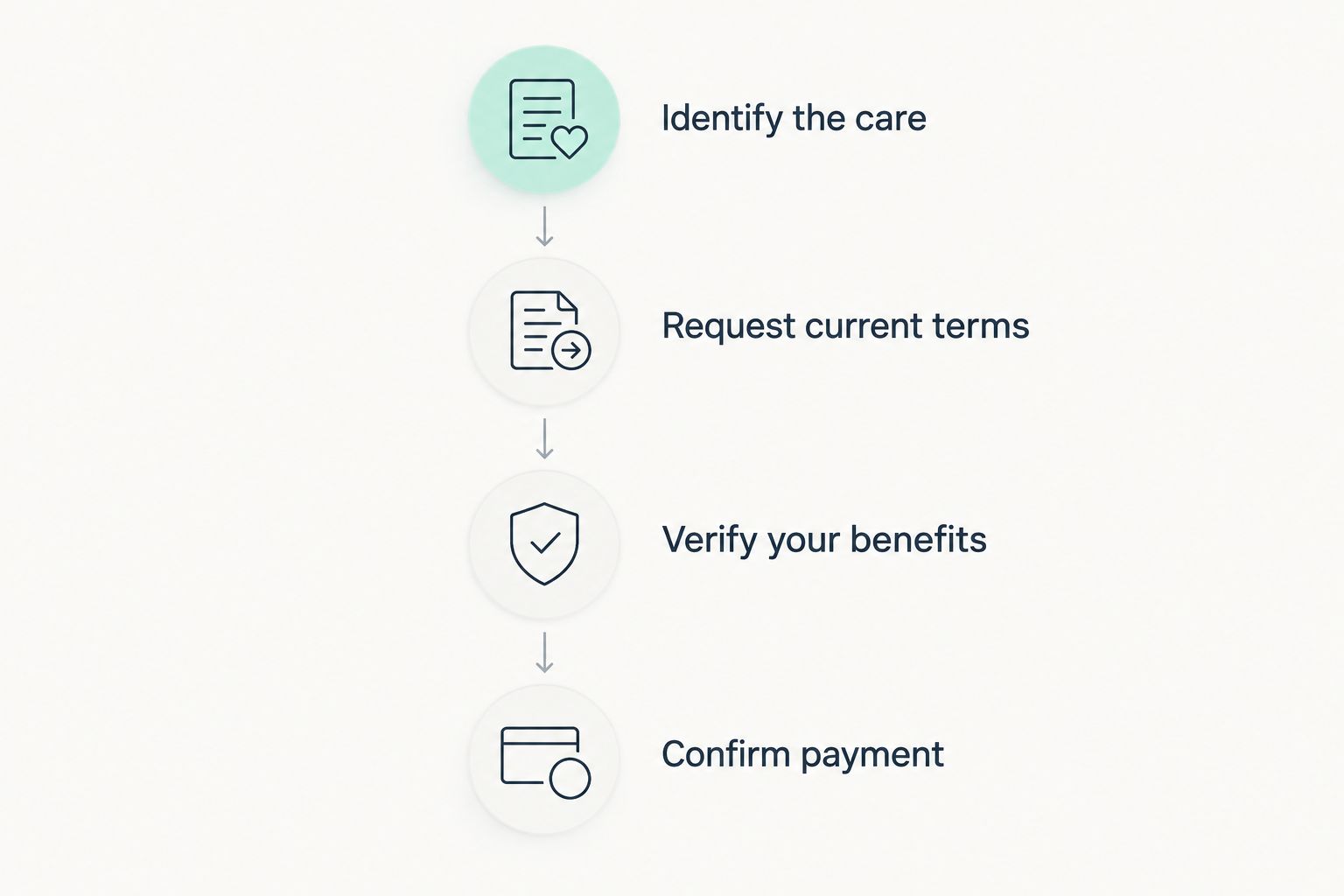
How to get a useful therapy estimate
A useful estimate names the clinician, service, appointment format, and payment route. A general answer about whether an office accepts insurance does not establish what your own appointment will cost.
Identify the care you need
Tell the practice whether you are seeking individual, couples, or family counseling and whether the client is a child, teen, or adult. Describe the concern in everyday language; you do not need to diagnose yourself to ask about services.
Ask which clinician provides that care and whether the initial appointment differs from ongoing sessions. Keep the answers together so your insurer and the practice are discussing the same service.
Request the current terms
Ask the practice for its current appointment fee and written payment policies. Include your preferred format: in person or virtual.
If you plan to use insurance, request the billing information your insurer needs to verify benefits. Do not send sensitive health information through an unverified communication channel merely to obtain an estimate.
Verify your benefits
Contact your insurer using the member-service information on your plan materials. Ask about outpatient mental health benefits for the specific clinician, location, and appointment format.
For 2026 benefits, confirm your current deductible status rather than relying on an old claim. Ask whether authorization or referral requirements apply, and record the response and any reference information provided.
Confirm the payment plan
Bring the insurer’s explanation back to the practice and resolve any differences. Ask what payment is expected at the appointment and how later claim adjustments are handled.
Treat an estimate as an estimate, not a promise of reimbursement. Your final responsibility depends on the applicable benefits, the service delivered, and claim processing.
Why therapy costs vary
Different estimates do not automatically mean one practice is better or worse. First establish whether the estimates describe the same care and payment arrangement.
- Service type: Individual, couples, and family appointments can involve different billing arrangements. Ask about the exact service you need.
- Clinician and practice terms: The treating clinician’s fee and network participation affect the estimate. Verify the specific clinician rather than the practice name alone.
- Appointment structure: Intake and follow-up appointments can differ in length or billing. Confirm what each quoted fee covers.
- Insurance design: Deductibles, copayments, coinsurance, and out-of-network benefits determine your share of eligible expenses.
- Appointment frequency: The agreed treatment schedule affects your ongoing budget. Discuss frequency with the clinician rather than assuming a schedule from the outset.
- Attendance and additional services: Cancellation rules and separately billed services affect expenses outside routine appointments. Read those terms before signing.
Compare equivalent appointments before comparing fees. A figure without the service, clinician, and coverage details is not enough to make a financial decision.
Is therapy cheaper with insurance in Charlotte?
Insurance does not automatically make every therapy appointment less expensive for you. Your responsibility depends on covered services, network participation, and the benefits that apply when you receive care.
Ask both the insurer and the practice to verify the specific arrangement. A practice’s statement that it accepts an insurer does not establish participation in every plan offered by that insurer.
What does “takes insurance” actually mean?
Ask whether the treating clinician is in network with your exact plan or whether the practice provides documentation for out-of-network claims. These are different arrangements.
Also ask who submits claims. If you must file them yourself, confirm what documents you need, where to submit them, and which filing deadlines apply.
What should I check about a deductible?
Ask whether the outpatient mental health service is subject to your deductible and what deductible amount remains. Confirm whether in-network and out-of-network benefits use separate deductibles.
A 2026 benefits check should also establish when your plan year resets. Do not assume that the amount you paid for an earlier appointment will remain your responsibility throughout treatment.
Is virtual therapy cheaper than in-person therapy?
Virtual therapy is not automatically cheaper than in-person therapy. Compare the actual appointment fee and applicable benefits for each format instead of treating the delivery method as a discount.
Virtual appointments can remove travel from your schedule, but they require a suitable private setting and a working connection. In-person appointments provide a separate counseling space but require travel and time away from other responsibilities.
| Format | Best for | Practical advantage | Practical limitation |
|---|---|---|---|
| In-person therapy | People who prefer a dedicated space away from home | The appointment takes place outside your household environment | Travel and scheduling require planning |
| Virtual therapy | People who can participate privately from a suitable location | No trip to the counseling office is needed | Privacy, connection quality, and location requirements need checking |
Counselingcharlotte is a therapy option for Charlotte-area children, teens, and adults seeking in-person or virtual counseling. Its services include counseling for anxiety, depression, trauma, OCD, and couples or families; review Counselingcharlotte for practice information, then confirm the current fee and payment arrangements directly.
The practical advantage is having both formats to discuss. Neither format alone establishes affordability, insurance coverage, or the right clinical fit for your situation.
Can I use out-of-network benefits for therapy?
Out-of-network benefits can help pay for eligible therapy when your plan includes that coverage. A superbill documents services for a claim; it does not guarantee that the insurer will reimburse you.
Before paying with reimbursement in mind, ask your insurer whether outpatient mental health services are covered out of network. Check the deductible, reimbursement method, documentation requirements, and claim deadline.
Then ask the practice whether it provides the required documentation. Keep appointment receipts and claim responses together so you can track what you paid, what you submitted, and what the insurer decided.
Do not budget as though an unapproved reimbursement has already arrived. Make sure the upfront payment is manageable while the claim is reviewed, including the possibility that the claim is denied.
How do I make therapy fit my budget?
Start by telling the clinician what you can sustain financially and logistically. You can discuss treatment priorities and appointment frequency without promising to follow a schedule you cannot maintain.
Ask about payment arrangements rather than assuming a practice offers reduced fees. If you need another route, ask your insurer or employer benefit administrator which covered counseling options you can access.
Ask these questions before the first appointment
Use a short written checklist when contacting a practice:
- What is the current fee for the clinician and service I need?
- Are intake and follow-up appointments billed differently?
- Does this clinician participate in my specific insurance plan?
- What payment is expected at the appointment?
- What are the cancellation and missed-appointment policies?
- Are there separate charges for services outside appointments?
- What documentation is provided if I submit an insurance claim?
Bring the same checklist to Counselingcharlotte or any other practice you contact. Consistent questions make the answers easier to compare and reduce confusion about what an estimate includes.
Recheck when something changes
Update your estimate when your insurance, clinician, appointment format, or treatment schedule changes. An earlier benefits check does not establish the terms of a different service.
Keep a copy of the 2026 payment policies you agree to and review billing statements as they arrive. If a charge differs from your expectation, ask the practice to explain the service billed before assuming the statement is correct or incorrect.
FAQ
How much does therapy cost in Charlotte NC without insurance?
Without insurance, you pay the fee agreed with the practice for your specific clinician and service. Request the current fee, intake terms, and cancellation policy before scheduling.
Is therapy always cheaper if I use insurance?
Therapy is not always cheaper for you when you use insurance. Your deductible, network status, covered services, and other plan terms determine your responsibility.
Can I get reimbursed if my therapist is out of network?
You can seek reimbursement if your plan includes applicable out-of-network benefits and the claim meets its requirements. A superbill supports a claim but does not guarantee payment.
Does virtual therapy cost less than office visits?
Virtual therapy does not automatically cost less than office visits. Ask the practice and insurer about each format’s fee and benefits, then consider privacy and travel needs.
Can my employer help me pay for counseling?
An employer EAP can provide counseling benefits if your employer offers the program and you meet its eligibility terms. Confirm authorization, participating clinicians, and how care continues after the benefit ends.
What should I ask before booking therapy for my child?
Ask about the clinician’s services for your child’s age group, appointment fees, caregiver participation, and payment policies. Verify insurance benefits for the specific service rather than assuming your own benefits apply identically.
Does Counselingcharlotte offer in-person and virtual therapy?
Counselingcharlotte provides in-person and virtual mental health counseling for children, teens, and adults in the Charlotte area. Confirm current fees, clinician fit, and payment arrangements directly with the practice.
One last thing
The most useful fee question is not just what an appointment costs, but what you will owe and when. A reimbursement arrangement can leave you paying upfront, while a covered appointment can still carry deductible responsibility.
Before booking, get the practice’s payment terms and your insurer’s benefit explanation side by side. Resolve disagreements first; a clear payment arrangement lets you focus the appointment on the reason you sought counseling.


