

Insurance can cover couples therapy in North Carolina when a session treats a covered mental health condition and meets your plan’s requirements; counseling focused only on relationship improvement is generally not covered. A covered session can still leave you responsible for a deductible, copayment, or coinsurance, so confirm the specific service—not just your therapist’s network status—before booking in 2026.
- Does insurance cover couples therapy in North Carolina? Coverage depends on the treatment purpose and your specific plan.
- Relationship counseling alone generally does not qualify as covered mental health treatment.
- Counselingcharlotte provides in-person and virtual couples counseling in the Charlotte area; verify insurance arrangements before booking.
- Ask about family psychotherapy benefits, provider participation, authorization, and your share of the bill.
Why this matters
A therapist accepting your insurance does not mean every service that therapist provides is covered. Your insurer evaluates the treatment purpose, billing information, provider eligibility, and benefit terms—not simply whether two people attend.
That distinction matters before you commit to ongoing appointments. If your health plan excludes relationship counseling, an employer benefit is a separate route to investigate; this guide explains how to use an employer EAP benefit for counseling in Charlotte.
Does insurance cover couples therapy in North Carolina?
Sometimes—but coverage follows the covered treatment, not the label “couples therapy.” A session involving a partner can qualify when the clinician is treating an identified patient’s covered mental health condition and the partner’s involvement serves that treatment. A session devoted solely to communication, relationship satisfaction, or premarital preparation generally falls outside that medical benefit.
The distinction is reflected in the Centers for Medicare & Medicaid Services’ Medicare Benefit Policy Manual, Chapter 15, Section 80.2: family counseling is covered under Medicare only when its primary purpose is treating the patient’s condition. That is a Medicare rule, not a coverage promise for commercial insurance, NC Medicaid, or an employer plan.
Use the comparison below to separate the main payment routes. Each has a different eligibility question, and none should be treated as interchangeable.
| Route | Best for | Main advantage | Main limitation |
|---|---|---|---|
| Health insurance | Treatment of a covered mental health condition that appropriately involves a partner | Uses an existing medical benefit when requirements are met | Relationship-only counseling can be excluded; network and claim rules still apply |
| Employer assistance program | Employees or eligible household members seeking support within their EAP terms | Offers a separate benefit to investigate | Relationship counseling, provider choice, and appointment limits depend on the program |
| Self-pay | Relationship-focused counseling excluded by a health plan | Does not require an insurer to approve the service | You remain responsible for the bill; later reimbursement is not assured |
Marriage status alone does not settle the question. Being married does not automatically make counseling covered, and being unmarried does not by itself explain whether a partner can participate in covered treatment.
When treatment of a mental health condition includes your partner
A clinician can involve your partner when that participation is clinically appropriate for your treatment. For example, a session might address how a covered anxiety or depression condition affects daily interactions and how your partner can support the treatment plan.
A diagnosis is not a shortcut to coverage. The diagnosis must be clinically accurate, and the service must address the condition being billed. An insurer can still apply exclusions, medical-necessity criteria, authorization requirements, or provider restrictions.
Before using this route, ask the clinician who the identified patient will be, what the treatment goals are, and how partner participation supports those goals. Ask how the clinician distinguishes individual treatment involving a partner from counseling in which the relationship itself is the main focus.
There is also a privacy trade-off. Insurance claims contain information needed to process treatment, including diagnosis and service information. Ask what appears on claims and explanations of benefits, particularly when you and your partner share a policy or account access.
When the goal is relationship improvement
If your primary goals are rebuilding trust, improving communication, preparing for marriage, or deciding whether to stay together, ask about relationship counseling directly. Do not describe the appointment as individual therapy simply because that benefit appears easier to use.
Relationship-focused care can be valuable without meeting a health plan’s definition of covered medical treatment. The limitation is financial: your policy’s mental health benefit does not automatically include every kind of counseling.
Ask the practice whether it distinguishes relationship-focused appointments from medically necessary treatment involving a partner. Then ask the insurer whether your plan has an explicit marriage or relationship counseling exclusion.
If coverage is excluded, evaluate an EAP or self-pay arrangement on its own terms. Do not assume a different billing label will change the underlying exclusion, and do not ask a clinician to document symptoms you do not have.
Why couples therapy coverage varies
For a 2026 appointment, verify the current benefit rather than relying on a previous claim or an older directory listing. These factors determine which questions you need answered:
- Treatment purpose: Is the appointment treating a covered condition, or is relationship improvement the primary service?
- Benefit exclusions: Does the policy exclude marriage counseling or impose specific conditions on family psychotherapy?
- Provider participation: Is the individual clinician participating in your exact plan, at the location or through the format you will use?
- Claim requirements: Does the insurer require authorization, a referral, particular documentation, or an eligible service code?
- Appointment format: Do in-person and telehealth services have different requirements under your plan?
- Patient responsibility: Do deductible, copayment, coinsurance, or out-of-network rules apply to the covered service?
A practice saying it accepts an insurance company is only a starting point. Employer plans and individual policies offered under the same insurer’s name can have different networks and benefit terms.
For an employer-sponsored plan, also identify the plan administrator. An insurer’s logo on your card does not establish whether the employer’s plan is fully insured or self-funded, and that distinction matters when identifying the correct complaint or appeal route.
How do you verify coverage before booking?
Verify the appointment you intend to attend, not a general outpatient therapy benefit. Use this sequence before your first session, and repeat it if your coverage, clinician, or appointment format changes.
- Define the service. Ask the therapist whether the proposed appointment is relationship counseling or treatment of an identified patient’s mental health condition involving a partner. Request the anticipated service code if the practice can provide it before assessment.
- Call member services. Use the number on your insurance card. Ask whether the proposed service is covered, whether relationship counseling is excluded, and which conditions must be met for family psychotherapy.
- Verify the clinician. Confirm the individual clinician’s participation in your exact plan. Give the insurer the identifying information supplied by the practice rather than relying on the practice name alone.
- Confirm requirements. Ask about authorization, referrals, telehealth rules, out-of-network benefits, and your patient responsibility. Clarify whether an authorization is required before the appointment rather than after a claim is submitted.
- Save the response. Record the representative’s name, the date, and the call reference number. Request the relevant policy language or a written benefit response through your member portal.
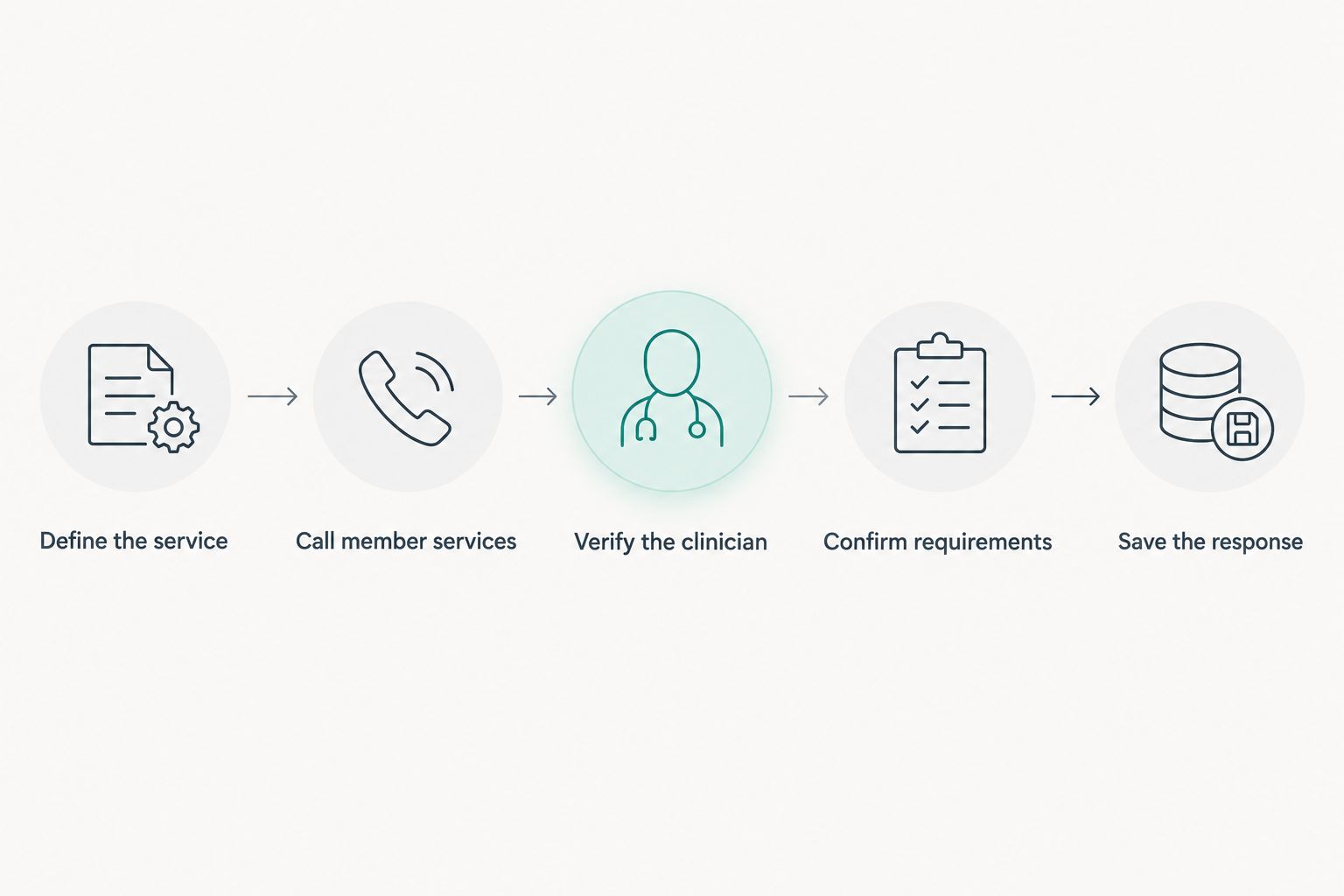
A benefit check is not a payment guarantee. Claims are adjudicated using the service actually provided, submitted documentation, eligibility on the appointment date, and the plan’s terms.
Keep your 2026 benefit response with the appointment paperwork. If the eventual claim differs from what you expected, that record gives you a specific starting point for questions rather than a vague recollection of a phone call.
What should you ask the therapist before the first appointment?
Ask the clinical and billing questions separately. A therapist can explain the proposed treatment, while billing staff can explain claim submission and the practice’s insurance arrangements.
Start with these questions:
- Will the relationship be the primary focus, or will one partner be the identified patient?
- What information about each partner becomes part of the clinical record?
- How do you handle confidentiality when both partners participate?
- Do you submit claims for this service, or would I submit an out-of-network claim?
- What happens if the insurer denies payment after the appointment?
Counselingcharlotte is a local option for Charlotte couples seeking in-person or virtual counseling. The practice provides mental health counseling that includes couples and family therapy; confirm clinician fit, insurance arrangements, and the proposed service directly through Counselingcharlotte.
Local access and appointment format help you choose a provider, but neither establishes insurance eligibility. Ask the coverage questions before deciding that a particular appointment is financially workable.
Does out-of-network coverage reimburse couples therapy?
Out-of-network benefits do not override a service exclusion. Reimbursement requires an eligible service, an eligible provider, the required documentation, and applicable out-of-network benefits under your policy.
A superbill is an itemized document used to support an insurance claim. It is not an approval letter, and receiving one does not mean the insurer will reimburse relationship counseling.
Before choosing an out-of-network appointment, ask the insurer whether the proposed service qualifies and how it determines the allowed amount. Ask what you must submit and where to find the claim deadline in your plan documents.
Do not treat an insurer’s general answer about outpatient psychotherapy as confirmation of relationship counseling coverage. Describe the actual service and request an answer tied to your specific benefit.
Can you use an EAP instead of health insurance?
An employee assistance program is worth checking when your health plan excludes relationship counseling. Whether an EAP includes couples support, who qualifies, and which clinicians participate depend on that employer’s program.
Contact the EAP administrator before booking independently. Ask whether you need a referral or authorization, whether your partner can participate, and what happens when the program’s available support ends.
Also ask about confidentiality and what information the employer receives. Do not assume your health insurer’s privacy notices explain a separate EAP’s procedures or that an existing therapist participates in the program.
What should you do if the insurer denies the claim?
Start with the written denial or explanation of benefits. Identify whether the problem is an excluded service, missing authorization, provider eligibility, incomplete information, or a medical-necessity decision.
Ask the practice to check the claim for factual errors. A correction is appropriate when information is wrong; changing an accurate diagnosis or service description solely to obtain payment is not.
If you disagree with the decision, follow the appeal instructions in your plan documents. Keep the denial, benefit correspondence, and relevant clinical documentation together, and ask which deadlines apply to your claim.
For a North Carolina insurance complaint, the North Carolina Department of Insurance can explain whether the issue falls within its authority. Self-funded employer plans generally follow a different regulatory route, so identify your plan type before choosing where to seek help.
FAQ
Does being married make couples therapy covered by insurance?
Being married does not automatically make couples therapy covered. Your insurer evaluates the service, treatment purpose, provider eligibility, and plan terms rather than marriage status alone.
Can insurance cover therapy if my unmarried partner attends?
An unmarried partner’s participation does not automatically prevent coverage. Ask whether partner involvement is clinically appropriate for a covered patient’s treatment and whether the specific service meets your plan’s requirements.
Does one of us need a diagnosis for insurance to cover couples therapy?
Coverage through a medical mental health benefit generally requires treatment of a covered condition. A diagnosis must be clinically accurate, and having one does not guarantee payment for relationship-focused counseling.
Is virtual couples therapy covered the same as in-person therapy?
Virtual couples therapy is not automatically covered on the same terms as in-person treatment. Verify the service benefit, clinician eligibility, and telehealth requirements for your specific plan.
Will a superbill guarantee insurance reimbursement?
A superbill does not guarantee reimbursement. Your plan must cover the service, and the claim must meet its provider, documentation, and out-of-network requirements.
Does Counselingcharlotte offer couples counseling?
Counselingcharlotte provides couples and family counseling in the Charlotte area, with in-person and virtual mental health services. Confirm the appropriate clinician, appointment format, and insurance arrangements directly before booking.
Should both partners bill their insurance for the same session?
Do not assume both partners can submit separate claims for the same session. Ask the practice how it identifies the patient and bills the actual service, then verify the applicable insurer’s rules.
One last thing
Ask which service is excluded—not just whether mental health care is covered. A policy can include outpatient mental health benefits while excluding counseling whose primary purpose is relationship improvement.
Before a 2026 appointment, get the practice’s description of the service and the insurer’s benefit response to match. If they describe different appointments, resolve that mismatch before you attend—not after the claim arrives.


